Frequently Asked Questions
Quick answers to help you plan your Morocco trip with confidence.
Local Travel TeamReal people, based in Marrakech
Tailor-Made TripsPlanned around you
Fast RepliesUsually within 24 hours
Common Questions
Everything you need to know about planning, booking and traveling in Morocco with Viajar Para Marrocos.
Booking & Payments
What payment methods do you accept?
We accept payment by credit card. The exact payment details for your trip are confirmed when we send you your itinerary, before you book.
Do I need to pay a deposit to book?
Yes. A deposit is required to confirm your booking. We confirm the deposit amount with your itinerary, so you know exactly what to pay before you commit.
What is your cancellation policy?
If you cancel, costs we have already paid on your behalf for your trip, such as hotel bookings and other reservations, cannot be refunded. Money for anything we have not yet paid for will be returned to you. If your plans change, contact us as early as possible.
Is travel insurance included?
No, travel insurance is not included in our trips. We recommend that you take out travel insurance before you travel to Morocco.
General
Is Morocco worth visiting?
Yes. Morocco packs an unusual amount of variety into one country: walled medieval medinas, the Sahara Desert, the Atlas Mountains, and an Atlantic coastline, all within a few hours' drive of each other. Its culture blends Arab, Amazigh (Berber) and French influences, which shows up in everything from architecture to food. Most first-time visitors combine at least one imperial city (Marrakech or Fes) with a trip into the Sahara. If you want help building that kind of route, contact Viajar Para Marrocos and we can plan it around your dates.
What is Morocco known for?
Morocco is best known for its historic medinas and souks (especially in Marrakech and Fes), the Sahara Desert around Merzouga and Erg Chebbi, the Atlas Mountains, the blue-washed town of Chefchaouen, and coastal towns like Essaouira. Moroccan cuisine (tagine, couscous, mint tea) and traditional crafts such as leather goods, ceramics, and rugs are also a major part of the country's identity.
What are the best places to visit in Morocco?
It depends on how much time you have, but the destinations that come up most often are: Marrakech (medina, souks, gardens), Fes (the old medina and traditional crafts), Merzouga and the Sahara Desert (camel trekking, desert camps), Chefchaouen (the Blue City), Essaouira (Atlantic coast), and the Atlas Mountains. Many travelers combine three or four of these in a single trip.
How many days do I need in Morocco?
As a general guide: 4-5 days is enough for one imperial city plus a short Sahara add-on; 7-10 days comfortably covers Marrakech, the Atlas Mountains and Merzouga, or Fes combined with the desert; and two weeks or more lets you add the coast (Essaouira or Chefchaouen) without rushing. Since every itinerary here is built around your dates and interests, tell us how many days you have and we'll suggest a realistic route.
Is Morocco suitable for first-time visitors?
Yes. Morocco has well-established tourism infrastructure in its main cities, but logistics-heavy parts of a trip, like reaching the Sahara or navigating a medina, are much easier with local knowledge. Many first-time visitors prefer a guided or custom-planned itinerary for exactly this reason rather than figuring out routes and transport on their own.
What should I know before traveling to Morocco?
A few practical points: entry requirements vary by nationality, so check what applies to your passport before booking; the currency is the Moroccan Dirham (MAD) and cash is still widely used outside larger hotels; bargaining is customary in souks and markets; modest dress is appreciated at religious sites and in more conservative areas; and temperatures swing more than visitors expect, especially between desert days and nights. See the Before You Travel section below for more detail.
Planning a Trip
How far in advance should I plan a Morocco trip?
A few weeks to a couple of months ahead is usually comfortable, and gives enough time to plan a custom itinerary around your dates. If you're traveling in high season (roughly March-May or September-November), planning a little earlier is worth it since destinations like Marrakech and the Sahara get busier.
Can I customize my Morocco itinerary?
Yes, this is one of the main things Viajar Para Marrocos does. Send us your travel dates, number of travelers, interests and preferred destinations, and we'll help put together an itinerary that fits, rather than a fixed package.
Can I combine cities and the Sahara Desert in one trip?
Yes, this is one of the most common ways to see Morocco. A typical route links Marrakech with the Atlas Mountains and Merzouga/the Sahara, or connects Fes to the desert before looping back through the mountains. See the Sahara & Merzouga section for more on what that part of the trip involves.
What destinations can be combined in a Morocco itinerary?
Common combinations include Marrakech with an Essaouira coastal add-on, Fes with Chefchaouen on a northern loop, Marrakech through Ouarzazate to Merzouga on a desert route, or Casablanca, Rabat and Tangier as a northern circuit. See the Morocco Destinations section for more on each place.
Can private tours be arranged?
Yes, private tours are one of the trip types you can request. Contact us with your preferred dates and destinations to get started.
Can itineraries be adapted to different travel styles?
Yes. Pace, activities and accommodation preferences can all be adjusted depending on whether you're traveling as a family, a couple, solo, or with a larger group. Mention your travel style when you contact us so the itinerary is built around it from the start.
Morocco Tours
What types of Morocco tours do you offer?
Through Viajar Para Marrocos you can request private tours, fully customized itineraries, Sahara Desert experiences, day trips, standalone activities, and transportation, either on their own or combined into one trip. Tell us what you're looking for and we'll build the request around it.
Do you offer group tours or only private tours?
Trips are handled individually rather than as fixed scheduled departures, so they can be arranged privately or adapted to whatever group size you're traveling with, from a solo traveler to a larger group. Mention your group size when you contact us so the itinerary is planned accordingly.
Can I book a multi-day Morocco tour?
Yes, multi-day itineraries covering several destinations (for example Marrakech, the Atlas Mountains and the Sahara) are one of the main things you can request. Length and pace are flexible and built around your dates.
Can I book a day trip from a city like Marrakech?
Day trips are one of the trip types you can request. From Marrakech, popular day-trip destinations in Morocco generally include the Atlas Mountains, Essaouira, and the Ouzoud Waterfalls. Let us know which one interests you when you contact us and we'll help arrange it.
Are Morocco tours suitable for families?
Yes, itineraries can be adapted for families, adjusting pace, activities and accommodation preferences to suit traveling with children. Mention ages and any specific needs when you get in touch.
Are Morocco tours suitable for solo travelers?
Yes. A private tour is often a reassuring way for solo travelers to see Morocco, since transport and logistics are arranged for you rather than figured out alone. Contact us with your dates and we can talk through what fits best.
What is included in a Morocco tour?
Inclusions vary by itinerary; transport, guiding, meals, accommodation and activities can all be part of a trip, but exactly what's included depends on what you request. When you contact us, ask specifically what's included for your itinerary so everything is clear before you confirm anything.
Sahara & Merzouga
Where is Merzouga?
Merzouga is a village in southeastern Morocco, right at the edge of the Sahara Desert. It's the main gateway to Erg Chebbi, Morocco's best-known dune field, and the usual base for camel trekking and desert camp stays.
What is Erg Chebbi?
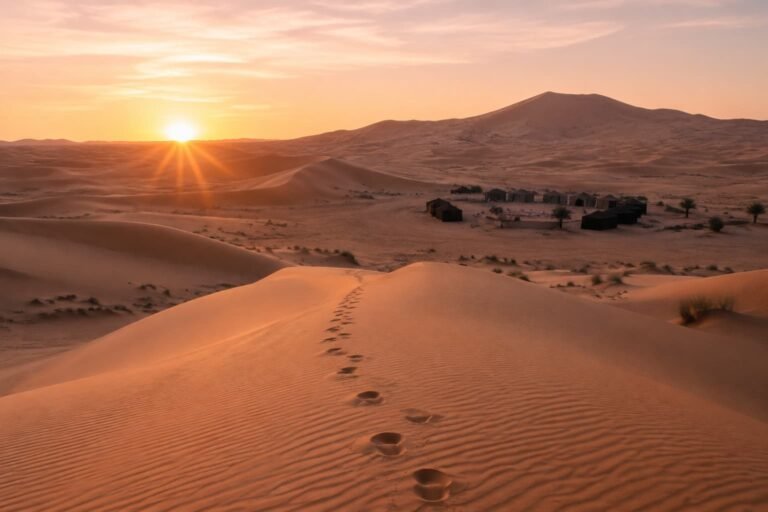
Erg Chebbi is one of Morocco's largest Saharan dune seas, located next to Merzouga, with dunes reaching up to around 150 meters. It's the classic backdrop for camel treks, desert camps, and sunrise or sunset views over the Sahara.
How do you get to Merzouga?
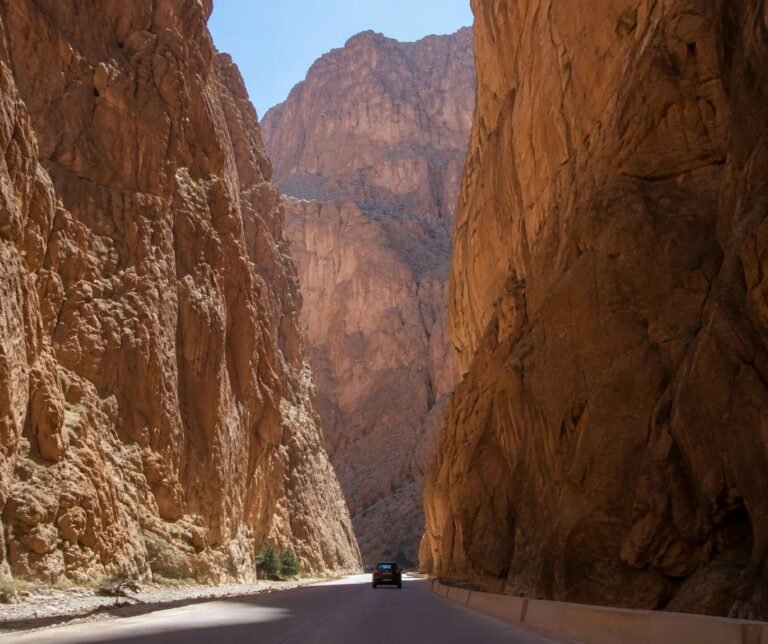
Merzouga is typically reached by road from Marrakech or Fes, usually as part of a multi-day route rather than a single nonstop drive, since it passes through the Atlas Mountains and towns like Ouarzazate or the Dades and Todra Gorges along the way. Transportation for this route is one of the services you can request through Viajar Para Marrocos.
How long should I stay in Merzouga or the Sahara?
One to two nights is typical for a desert camp experience with camel trekking, though this can be extended if you want more time in the desert. Since itineraries here are custom-built, let us know how much time you'd like to spend in the Sahara when you contact us.
What is a Sahara Desert tour like?
A typical Sahara tour includes the road journey through the Atlas Mountains and kasbah towns toward Merzouga, a camel trek into Erg Chebbi, and an overnight stay at a desert camp, usually timed around sunset and sunrise over the dunes. This is one of the trip types you can request as part of your Morocco itinerary.
What is camel trekking like?
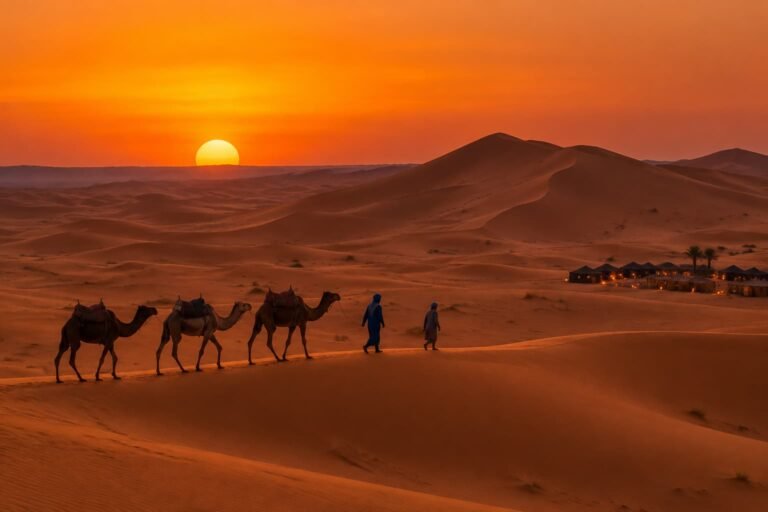
Camel trekking involves riding single-file across the dunes, usually for one to two hours, most often timed for sunset or sunrise when temperatures are milder and the light on the dunes is best. It's typically the way travelers reach a desert camp for an overnight stay in Erg Chebbi.
Are overnight desert camps available?
Yes, an overnight stay in a desert camp is a central part of most Sahara itineraries. Camps vary in style and comfort level, so let us know your preferences when you request your trip and we'll factor that into the itinerary.
What should I bring to the Sahara Desert?
Pack in layers, since desert days can be hot and nights get cold, along with sunscreen, sunglasses, a scarf or turban for sun and blowing sand, comfortable closed shoes for walking on dunes, a headlamp or flashlight, and a reusable water bottle.
Is the Sahara suitable for families with children?
Generally yes with some planning. Camel trekking has practical considerations for very young children, and shorter treks or alternative transport across the dunes are sometimes preferred in that case. Mention your children's ages when you contact us so the desert portion of the trip can be adapted.
What is the best time to visit the Sahara Desert?
Spring (March-May) and autumn (September-November) are generally the most comfortable, with warm days and mild nights. Summer (June-August) can be extremely hot during the day, and winter (December-February) has pleasant days but cold desert nights, so pack accordingly whichever season you travel.
Destinations
What is Marrakech known for?
Marrakech is one of Morocco's four imperial cities, known for its walled medina, the Jemaa el-Fna square, its souks, and gardens such as the Majorelle. It's the most common starting point for trips into the Atlas Mountains and the Sahara Desert.
What is Fes known for?
Fes is home to Fes el Bali, one of the largest car-free urban areas in the world, and the University of Al Quaraouiyine, considered one of the oldest continuously operating universities in the world. It's also known for traditional crafts like leather tanning and ceramics.
What is Chefchaouen known for?
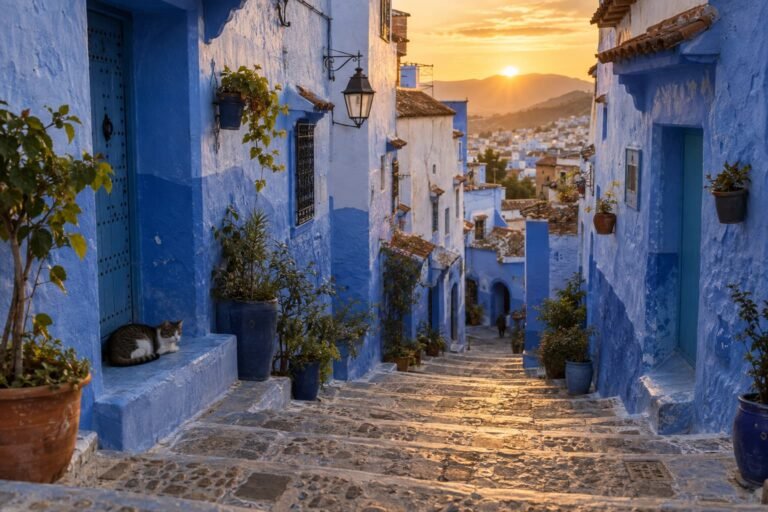
Chefchaouen, in the Rif Mountains, is known as Morocco's "Blue City" for the blue-washed walls of its old town. It's a popular stop on northern Morocco routes, often combined with Fes or Tangier.
What is Casablanca known for?
Casablanca is Morocco's largest city and main economic hub, home to the Hassan II Mosque, one of the largest mosques in the world. It's often a traveler's first arrival point because of its international airport, more than a primary sightseeing stop.
What is Essaouira known for?
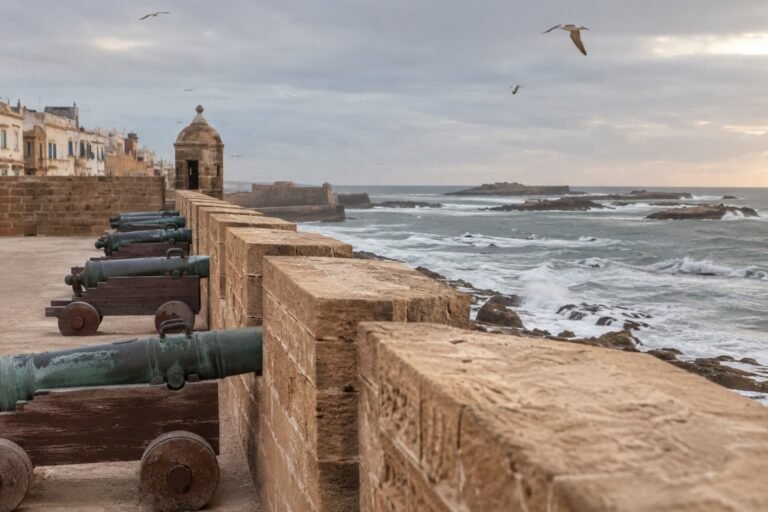
Essaouira is an Atlantic coastal town known for its fortified medina, a UNESCO World Heritage Site, its fishing port, and strong winds that make it popular for windsurfing and kitesurfing. It's a common day trip or short stay from Marrakech.
What is Rabat known for?
Rabat is Morocco's capital, known for the Hassan Tower, the Kasbah of the Udayas, and the Royal Palace. It tends to be quieter and less geared toward tourism than Marrakech or Fes.
What is Tangier known for?
Tangier sits on the Strait of Gibraltar, where the Atlantic meets the Mediterranean, and has long been a meeting point of European and North African cultures. It's often included on a northern Morocco route or used as a gateway between Morocco and Spain.
What are the Atlas Mountains known for?
The Atlas Mountains run across Morocco and are commonly visited as a day trip or as a stop between Marrakech and the Sahara Desert, with Berber villages, valleys, and, in the High Atlas, Mount Toubkal, North Africa's highest peak.
What is Ouarzazate known for?
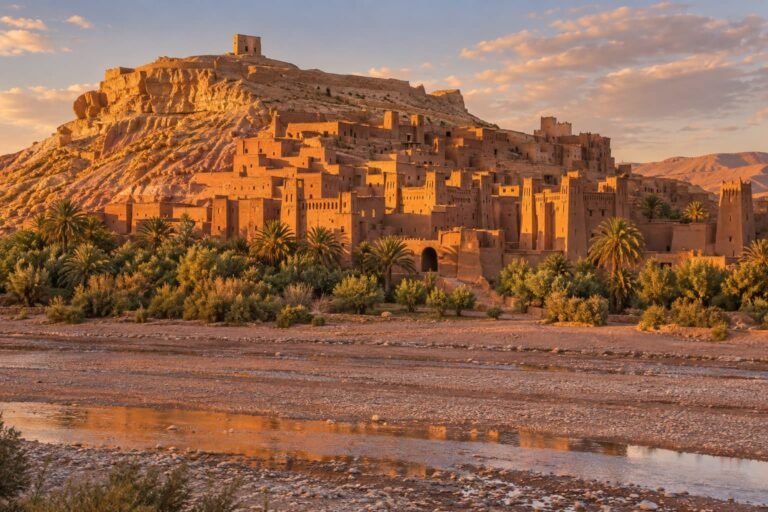
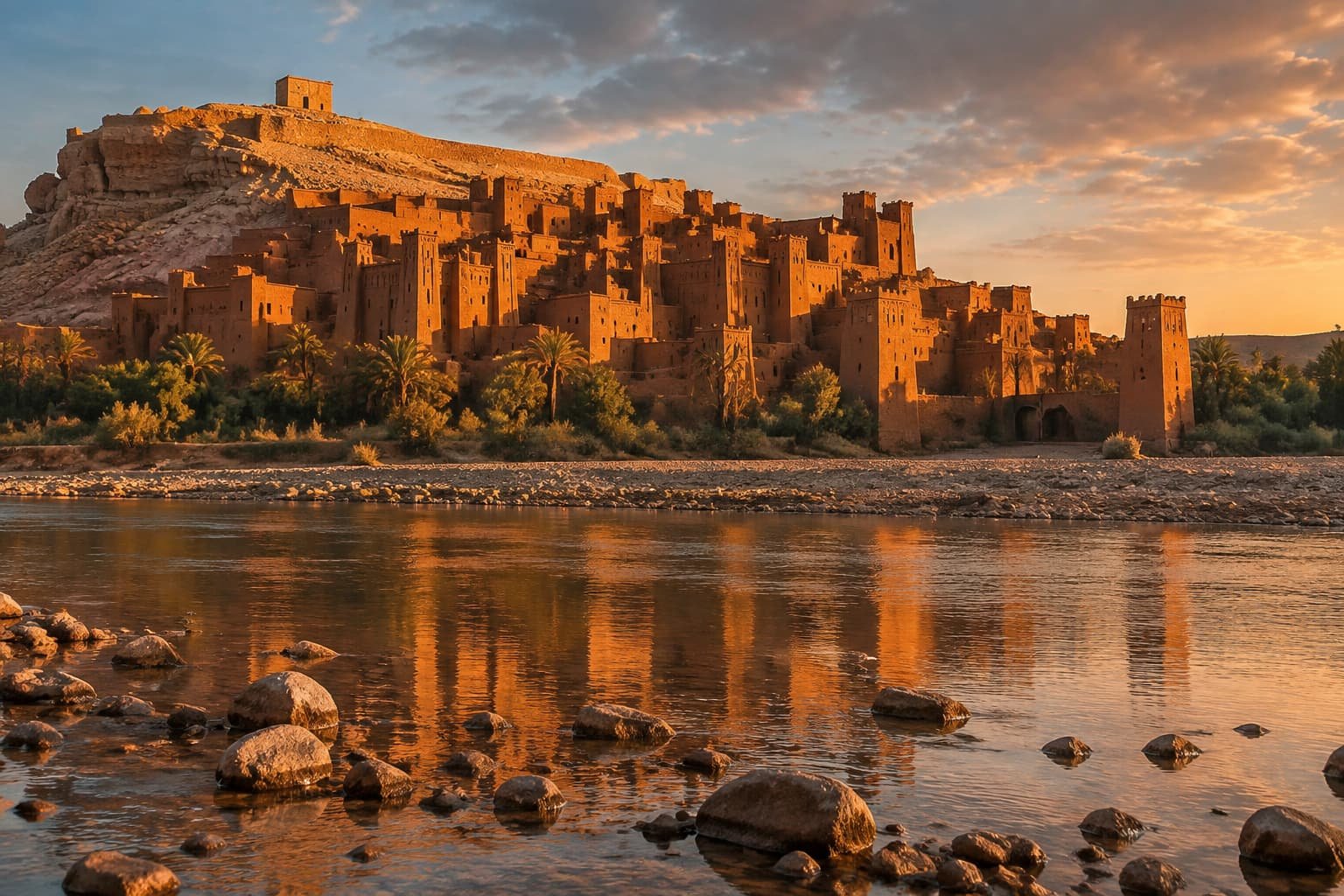
Ouarzazate, on the edge of the Sahara, is known as a gateway to the desert and as a hub for Morocco's film industry. Nearby is Ait Benhaddou, a UNESCO World Heritage kasbah that has appeared in numerous films.
Transportation
How can I travel between Moroccan cities?
The main options are a private car or driver, intercity buses, trains along the main Casablanca-Rabat-Fes-Tangier-Marrakech corridor, and domestic flights for longer distances. Private transportation can be arranged as part of your itinerary through Viajar Para Marrocos.
Is private transportation available?
Yes, transportation is one of the trip types you can request, either on its own or as part of a larger itinerary.
Can airport transfers be arranged?
Transportation, including transfers, is one of the services you can request. Let us know your arrival and departure details when you contact us and we'll help arrange it as part of your trip.
How long does travel between destinations take?
As a rough guide: Marrakech to Fes is around 7-8 hours by road (or about an hour by flight), Marrakech to Essaouira is around 2.5-3 hours, and Marrakech to Merzouga is typically 9-10 hours, usually split over two days with stops. Casablanca to Marrakech by train takes roughly 2.5-3 hours.
Is it better to travel by car or train in Morocco?
Trains are comfortable and efficient along the main Casablanca-Rabat-Fes-Tangier-Marrakech corridor. A private car or driver gives more flexibility for the Atlas Mountains, the Sahara, and smaller towns that trains don't reach, which is why most multi-destination itineraries rely on private transportation for at least part of the route.
Activities
What activities can I do in Morocco?
Popular activities include camel trekking and desert excursions in the Sahara, hiking in the Atlas Mountains, sandboarding on the dunes near Merzouga, cultural experiences like exploring souks and traditional cuisine, and city tours of the medinas. Day trips can also be added to combine several of these in one trip.
Is camel trekking available?
Yes, camel trekking is a standard part of most Sahara Desert experiences, usually used to reach a desert camp in Erg Chebbi. See the Sahara & Merzouga section for more detail.
Is sandboarding available in the Sahara?
Sandboarding on the dunes near Merzouga is a popular optional activity in the region. If you'd like to include it, mention it when you contact us so it can be added to your desert itinerary.
Can I go hiking in the Atlas Mountains?
Yes, hiking in the Atlas Mountains, for example around Imlil or Toubkal, is a popular activity and can be included as a day trip or a multi-day addition to your itinerary.
Are cultural experiences available, like markets and cuisine?
Yes. Morocco offers rich cultural experiences, from exploring souks and traditional crafts like leather tanning and ceramics in Fes, to trying local cuisine such as tagine and couscous. These can be woven into your itinerary alongside sightseeing and desert time.
Accommodation
Where do travelers stay during a Morocco tour?
Accommodation depends on your itinerary. During a Sahara Desert tour, an overnight stay in a desert camp is typically included, while multi-city itineraries usually include hotels or riads in each destination. Let us know your accommodation preferences when you contact us so we can factor them into your itinerary.
Can I request specific accommodation preferences?
Yes. Mention preferences such as riad versus hotel, or your budget level, when you get in touch, and they'll be taken into account when your itinerary is planned.
Booking & Contact
How do I request a Morocco tour?
The easiest way is to fill out the travel request form on the Contact page, or message us directly on WhatsApp. Include your dates, number of travelers, and what you're interested in, and we'll take it from there.
How can I contact Viajar Para Marrocos?
You can reach us on WhatsApp or by phone at +351 912 695 685, by email at booking@viajarparamarrocos.com, or through the Contact page. We're based in Marrakech, Morocco.
What information should I provide when requesting a trip?
It helps to include your travel dates, number of travelers, country you're traveling from, the type of trip you're after (private tour, custom itinerary, Sahara experience, day trip, activity, or transportation), your approximate trip length, and any destinations you already have in mind.
How long does it take to receive a response?
We usually reply within 24 hours, often sooner. WhatsApp is typically the fastest way to reach us.
Can I request a fully customized itinerary?
Yes, a custom itinerary is one of the main trip types you can request. Contact us with your dates, interests and preferred destinations and we'll help build a route around them.
Before You Travel
What currency is used in Morocco?
The Moroccan Dirham (MAD) is the local currency. Cash is still widely used, especially in souks, markets and rural areas, while cards are accepted more often in hotels and larger businesses.
What language is spoken in Morocco?
Arabic (Moroccan Darija) and Amazigh (Berber) are the official languages. French is widely used in business and tourism, and English is increasingly spoken in tourist areas, hotels and guided tours.
What should I pack for Morocco?
Layered clothing is essential, since temperatures can swing significantly, especially in the desert and mountains. Also pack comfortable walking shoes, sun protection, a scarf, and a plug adapter, since Morocco uses Type C/E sockets at 220V.
What should I wear in Morocco?
Modest clothing is appreciated at religious sites, in markets and in more conservative areas, generally covering shoulders and knees. Dress can be more relaxed at resorts and riad pools. Layers are useful year-round given the temperature differences between day and night, especially in the desert.
Do I need a visa to visit Morocco?
It depends on your nationality. Many visitors from the EU, US, UK, Canada and several other countries can enter Morocco for tourism without a visa for a limited stay, typically up to 90 days, but requirements do vary and change. Check with the Moroccan consulate or your government's travel advisory for the rules that apply to your passport before booking.
What should I know about Moroccan culture and etiquette?
A respectful greeting goes a long way, modest dress is expected at religious sites, and bargaining is a normal part of buying in souks and markets rather than something to avoid. Friday is a significant day, with mosques busier than usual. Alcohol is available in some licensed restaurants and hotels but isn't sold everywhere.
Direct WhatsApp Support
Message our team directly, before you book and during your trip.
Travel With Confidence
Honest information about what each day involves, before you confirm anything.
Personalized Assistance
Advice tailored to your dates, pace, budget and interests.

Still Need Help?
We're Here for You!
Our team is ready to answer your questions and help you plan the right Morocco trip for you.
Chat on WhatsAppSend Us a Message
Explore the Beauty of Morocco
From ancient cities to golden dunes, let us help you plan a trip you'll remember.