

Most people planning a first trip to Morocco start the same way. They open a map and draw a line between every place they’ve seen online — Chefchaouen’s blue alleys, the Sahara at sunrise, Marrakech’s souks, Essaouira’s harbor. Then they add up the driving. The line covers more ground than the trip has days for.
That’s the actual problem a custom tour solves. Not “private versus group” — though that matters too. It’s sequencing: which regions genuinely belong together on a given number of days, where the long drives are, and where you’ll regret adding one more stop. This guide walks through that decision in the order it actually needs to happen, covers what a quoted price does and doesn’t include, and ends with two complete itineraries — a 7-day and a 10–12 day version — built around real distances, not a map that makes everything look adjacent.
Key Takeaways
- A custom Morocco tour is a private, dates-and-interests-first itinerary — not a fixed-departure group tour or a single pre-packaged product. Pace, hotels, route, and activities are set by what you tell the operator.
- Morocco’s four “must-see” regions — desert, Atlas Mountains, coast, and imperial cities — can’t all be covered properly in under 10–12 days without turning most of the trip into driving. Pick two, at most three, per week of travel.
- Marrakech to Merzouga (the main Sahara gateway) is roughly 560 km and is almost always split across two driving days, not attempted in one push.
- A private driver-guide runs roughly €90–250 per day depending on vehicle and season — priced per vehicle, not per person (Marhire, 2026; Morocco Private Transport, 2026).
- The most common planning mistake isn’t picking the wrong places — it’s underestimating how much of a short trip goes to the car. Cap driving at roughly 5–6 hours a day if you also want to see anything once you arrive.
Written by our Morocco-based tour planning team — we route these itineraries in-house out of Morocco, checking day rates and drive times against current operator pricing each season rather than reselling a third-party catalog.
What “Custom” Actually Means (and What It Doesn’t)
Three different things get sold under similar names in Morocco, and mixing them up is the first planning mistake:
- A fixed-departure group tour runs on a set date, a set route, and a shared vehicle with other travelers. You pick a departure that matches your dates, not the other way around.
- A private tour usually still follows a pre-built route (say, a “3-day Marrakech to Fes via the desert” package) but with only your group in the vehicle. More flexible than a group tour, still built around someone else’s itinerary.
- A custom (or tailor-made) tour starts from your dates, group size, interests, and budget, and the route is built around those — not selected from a catalog.
A custom tour isn’t automatically more expensive than a private one — it’s the same private vehicle and driver-guide in most cases. The difference is that stops, pacing, and accommodation level are decided around you specifically, which matters most when your trip doesn’t fit a standard template: you have 9 days instead of 7, you want three nights in the desert instead of one, or you’re traveling with a toddler and need shorter driving days.
Start With Trip Length, Not Destinations
Decide how many days you actually have before you decide where to go. It sounds backward, but building a wish list first is exactly how trips end up over-scheduled.
As a working baseline:
| Days available | What’s realistic | What to skip |
|---|---|---|
| 3–4 days | One region only — Marrakech and the Atlas foothills, or a short Fes-and-imperial-cities loop. A desert dash is technically possible but means two full driving days out of four. | The Sahara (unless you fly to a regional airport near it), the coast, more than one imperial city |
| 5–6 days | Marrakech + Atlas Mountains + one Sahara camp night, or Marrakech + Essaouira coast, or the imperial cities loop (Fes–Meknes–Volubilis–Rabat) | Combining desert and coast; more than 2–3 base cities |
| 7–9 days | Marrakech + High Atlas/Ait Ben Haddou + 2 nights in the Sahara, with a coastal or imperial-city add-on if you keep the pace efficient | A full loop touching every region without at least one long transfer day |
| 10–14 days | A genuine loop: imperial cities, Sahara, and coast or Atlas trekking, without feeling rushed | Trying to also fit in Chefchaouen and Essaouira and multiple Atlas hikes — pick your two or three anchors |
| 14+ days | Everything above, plus real slack — a rest day, a longer trek, time to change plans if weather or energy shifts | — |
If someone tells you “you can see all of Morocco in a week,” ask which two full driving days they’re planning around, because there are always at least two on a route that touches the desert.
The Regions You’re Actually Choosing Between
Morocco’s tourist geography breaks into five distinct zones, and the mistake most first-time planners make is treating them as equally close together because they all fit on one country map.
| Region from Marrakech | Distance | Drive time |
|---|---|---|
| Essaouira (coast) | 180 km | ~3 h |
| Ait Ben Haddou / Ouarzazate | 200 km | ~3.5 h |
| Fes (imperial cities) | 530 km | ~5.5 h direct |
| Merzouga (Sahara) | 560 km | ~9–10 h, typically 2 days |
| Chefchaouen | 580 km | ~7 h, or overnight bus |
Times are driving-only, no stops. Add 1–2 hours for photo/lunch stops on any route over 3 hours.
The desert (Merzouga/Erg Chebbi, or the less-visited Zagora/M’Hamid route). This is what most people picture when they imagine Morocco, and it’s genuinely worth the drive — but it’s the furthest anchor point from Marrakech, and there’s no way to shorten the trip except by flying into a regional airport closer to it.
The High Atlas Mountains. Villages like Imlil sit less than two hours from Marrakech and work as a half-day or overnight add-on. A real Toubkal trek (North Africa’s highest peak at 4,167 m) is its own multi-day commitment, not a stop on a bigger loop.
The Atlantic coast (Essaouira, or Agadir further south). Essaouira is close enough to Marrakech (about 180 km, 3 hours) to work as a genuine add-on without eating into your other days.
The imperial cities (Fes, Meknes, Rabat, and — arrival logistics aside — Casablanca). This is effectively a separate trip axis from Marrakech-south. Fes sits roughly 530 km and 5–6 hours from Marrakech on the direct highway — workable as a one-way transfer but a long, low-value round trip if you’re basing yourself in Marrakech the whole time.
Chefchaouen, the north. It’s the one region that doesn’t connect efficiently to a Marrakech-based loop at all — it sits north of Fes, closer to Tangier than to anywhere in the south. If Chefchaouen’s blue medina is a must, the realistic way to add it is at the end of an itinerary that already ends in Fes (via a private transfer or a short flight back from Tangier), not as a side trip from Marrakech. Trying to bolt it onto a Marrakech-desert loop is what turns a 10-day trip into three separate long-haul driving days.
One region most itineraries get wrong: Casablanca. It’s where the vast majority of international flights land (Mohammed V International, airport code CMN), but a lot of trip-planning content treats it as something to skip through as fast as possible. If you’re flying in, your itinerary should account for that first and last day around Casablanca’s airport logistics — not pretend the trip starts in Marrakech.
How to Avoid Spending Your Trip in the Car
This is the single most common way a custom Morocco itinerary goes wrong: too many regions, not enough days, and the gap gets absorbed by longer driving days than anyone actually enjoys.
A few working rules:
- Cap driving at 5–6 hours a day if you also want to do anything else that day. Marrakech to Merzouga is a 9–10 hour drive in total — split it into two 4–5 hour days with an overnight in the Dades Valley, not one long push.
- Build in the stops you actually want as planned stops, not “we’ll see it on the way.” Ait Ben Haddou, the UNESCO-listed kasbah on the Marrakech–Ouarzazate road, takes at least an hour to walk properly.
- Don’t schedule a long drive and a full activity day back to back without a buffer. Arriving at a desert camp after a 6-hour drive and then doing a full camel trek and 4×4 excursion the same evening is how people end a “highlight” day exhausted rather than glad they came.
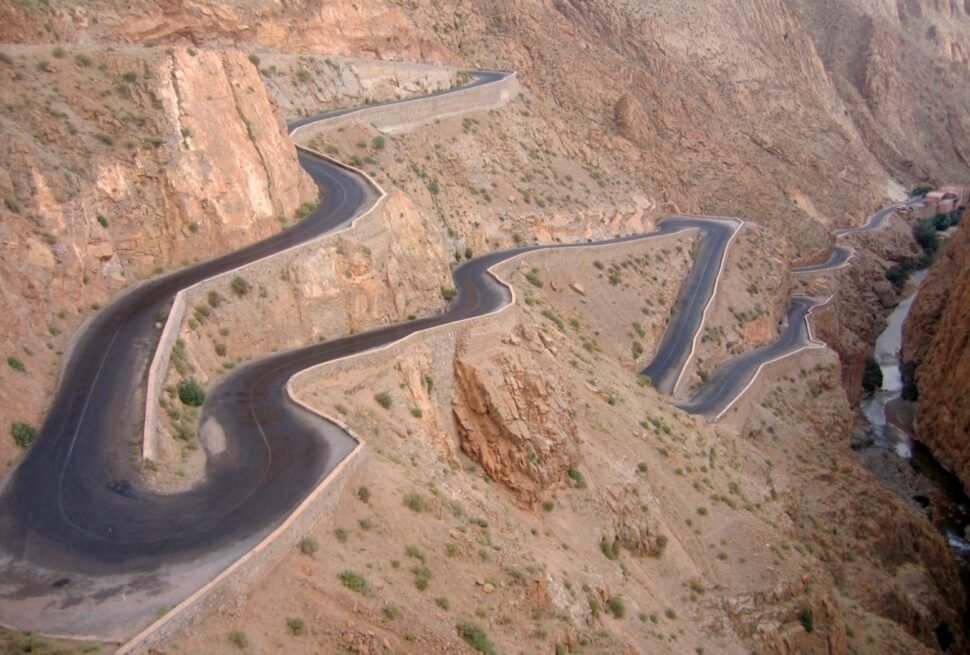
- If a route looks efficient on a map, check it against actual road type. The Tizi n’Tichka pass (the main road between Marrakech and the south) is a mountain pass with switchbacks — the kind of road where distance and drive time diverge more than on a highway.

Choosing Your Pace, Transport, and Accommodation Style
Private driver-guide vs. self-drive vs. a guide who joins you on public transport. A private driver-guide is the standard setup for a custom tour. You get door-to-door flexibility, someone who knows the roads, and no parking or fuel logistics to manage yourself. Rates run roughly €90–250 per day (about 800–1,800 MAD), depending on vehicle size, route length, and season (Morocco Private Transport; Marhire, both 2026). These are published operator rates, not an official government price list. It’s a per-vehicle rate, not per person, so it gets more cost-effective the larger your group. Self-driving is workable if you’re comfortable with mountain roads and roundabout-heavy city driving, but it removes the local knowledge that flags a closed road or a better lunch stop.
Accommodation style shapes pace as much as budget does. A riad in a medina means walking distances that a modern hotel outside the walls doesn’t — factor 15–20 extra minutes into any evening plan. In the desert, camp tiers vary from a shared-bathroom standard tent to a private-bathroom “luxury” tent with real beds. That single choice changes what a night in Merzouga actually feels like more than almost anything else you’ll decide on the whole trip.
What’s Actually Included in a Custom Tour Price
This is the question most comparison-shopping travelers have and most quotes don’t spell out. A typical private-vehicle day rate covers the driver-guide, the vehicle, and fuel. It generally does not automatically include: meals beyond what’s specified, museum or kasbah entry fees, the camel trek or 4×4 excursion itself (often bundled separately at the desert camp stage), or the desert camp night’s accommodation. Before you compare two quotes side by side, confirm each one covers the same list — a lower headline price that excludes the camp night isn’t actually cheaper.
How Much Does a Custom Morocco Tour Cost?
There’s no single “cost of a custom Morocco tour” — it’s driven by trip length, vehicle/driver tier, accommodation level, and how much of the trip is desert-camp nights (which run a premium over city hotels). As a rough per-person range for a 7–10 day private trip, double occupancy:
| Tier | Per person (7–10 days, double occupancy) |
|---|---|
| Budget | €700–1,200 |
| Mid-range | €1,200–2,200 |
| Luxury / bespoke | From €2,200 (up to €12,000+ at the high end) |
Excludes international flights. Group size, season, and desert-camp tier are the biggest swing factors.
Budget tiers cover shared/standard accommodation, a standard desert camp, and a shared or smaller private vehicle. Mid-range adds ensuite desert camps, 3–4 star riads and hotels, and a fuller private vehicle. Luxury covers 5-star riads and private luxury desert camps. At the top end, this is also the kind of bespoke, high-touch planning that firms like Sun-Trails price from roughly €2,200 per person and up, depending on season and exclusivity level (Sun-Trails, 2026 — one operator’s published rates, cited as an example, not an industry average).
Two Custom Itineraries You Can Adapt
These are starting frameworks, not fixed products — the whole point of a custom trip is adjusting the specifics to your dates and interests.
7-Day: Marrakech, Atlas & Desert
| Day | Route | What it covers |
|---|---|---|
| 1 | Arrive Marrakech | Settle in, medina orientation, Jemaa el-Fna in the evening |
| 2 | Marrakech (full day) | Bahia Palace, souks, a garden — no driving day |
| 3 | Marrakech → Dades Valley (~310 km, ~6 h with stops) | Tizi n’Tichka pass, Ait Ben Haddou (UNESCO), overnight in the Dades Valley |
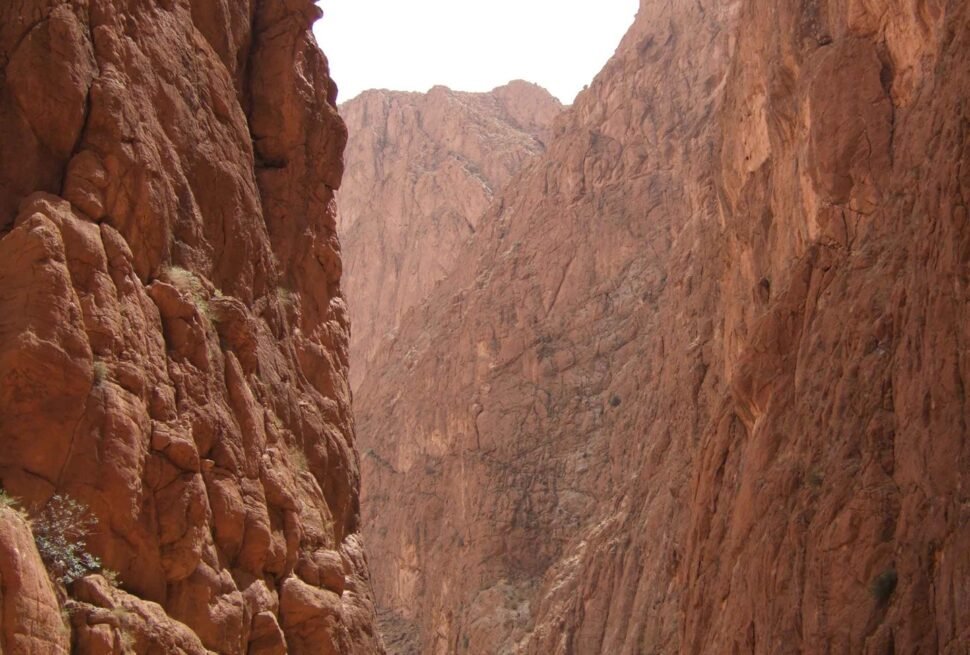
| 4 | Dades Valley → Merzouga (~200 km, ~4.5 h) | Todra Gorge stop, sunset camel trek, overnight desert camp |
| 5 | Merzouga → Marrakech (long day, ~9-10 h, or split) | Sunrise over the dunes before departure |
| 6 | Marrakech (buffer/flex day) | Atlas day trip to Imlil, a hammam, or unscheduled time |
| 7 | Depart | — |
10–12 Day: Imperial Cities, Desert & Coast
| Days | Route | What it covers |
|---|---|---|
| 1–2 | Arrive Casablanca → Marrakech | Half-day Casablanca (Hassan II Mosque), then transfer to Marrakech |
| 3–4 | Marrakech | City exploring, one Atlas day trip |
| 5–6 | Marrakech → Merzouga (2-day drive) | Same route as the 7-day version, paced over two days |
| 7 | Merzouga → Fes (~460 km) | Sunrise in the dunes, transfer north via the Ziz Valley |
| 8–9 | Fes | Medina, tanneries, day trip to Meknes and Volubilis |
| 10–11 | Fes → coast or back to Marrakech | Essaouira coastal close, or direct to Casablanca for departure |
| 12 | Depart | — |
Either route works as a starting framework whether you want the full loop or just the desert segment on its own. If Chefchaouen is a priority, the cleanest add is extending the 10–12 day version by 2 days at the Fes end rather than trying to fit it into the 7-day loop.
Best Time of Year to Build Around
- Desert (Merzouga/Erg Chebbi): October–April is the comfortable window; summer daytime heat regularly exceeds 40°C. Winter desert nights get cold enough (near or below freezing in December–January) that a heated or well-insulated camp tent matters.
- High Atlas Mountains: Snow closes higher trekking routes from roughly December through March. Spring and early autumn are the more reliable trekking windows.
- Coast (Essaouira, Agadir): Mild and windy nearly year-round — the most forgiving region for a shoulder-season or even winter visit.
- Imperial cities: Spring and autumn avoid both summer heat and winter chill in the Middle Atlas foothills.
If your custom itinerary combines the desert with the mountains or Fes, spring (March–May) and autumn (September–November) are the two windows where all the regions you’re likely combining are simultaneously workable.
Common Mistakes When Planning a Custom Morocco Trip
- Treating every “top 10 places” list as one itinerary. Those lists are a menu, not a route.
- Not building in a buffer day. One unscheduled day absorbs a delayed pass closure, a flight change, or a place you liked enough to want more time.
- Underpricing the desert-camp upgrade. Often the single best money-to-experience trade in the whole trip.
- Assuming a medina is walkable the way a modern downtown is. Old-city layouts are dense, mostly car-free, and easy to get turned around in.
- Ignoring Casablanca’s role as the arrival airport. Plan your first and last day around it deliberately.
How to Actually Book a Custom Morocco Tour
In practice, building a custom itinerary is a back-and-forth, not a form you fill out once: you share your travel dates, group size, rough budget, and the regions or experiences that matter most, and a planner turns that into a day-by-day route with real drive times and accommodation options attached — then adjusts it based on your feedback before anything is booked. Most operators, including ours, can turn a first draft around within a few days; if your dates are inside the next 4–6 weeks, say so up front, since peak-season vehicles and camps book out.
Ready to start? Get in touch with your travel dates and interests and we’ll turn it into a real, day-by-day route.
Frequently Asked Questions
How many days do I need for a custom Morocco tour?
A single-region trip works in 3–4 days. Combining the desert with anything else realistically needs 7 days minimum, and a fuller loop touching imperial cities, the desert, and the coast is more comfortable at 10–12 days or more.
Is a custom tour more expensive than a group tour?
Not necessarily. A fixed-departure group tour splits vehicle and driver costs across more travelers, which can be cheaper per person for solo travelers or couples. But a private driver-guide is priced per vehicle, so for a family or small group of 3–4, a custom private tour can cost about the same per person while giving you full control over the route and pace.
Can I combine the Sahara desert and the coast in one trip?
Yes, but it needs at least 9–10 days to do both properly — the desert and the coast sit on opposite sides of Marrakech, and connecting them usually means routing back through Marrakech or the Atlas.
What’s included in the price of a custom tour?
At minimum, the private vehicle, driver-guide, and fuel. Confirm separately whether meals, entry fees, the desert camp night, and activities like the camel trek are included or quoted on top.
Is self-driving a realistic option instead of hiring a driver?
It’s workable if you’re comfortable with mountain-pass driving and dense old-city traffic, but most custom-tour travelers hire a driver-guide specifically for the Marrakech–Merzouga route, since the Tizi n’Tichka pass and rural roads beyond Ouarzazate are more demanding than they look on a map.
What’s the best time of year for a multi-region custom trip?
Spring (March–May) and autumn (September–November) are the most reliable windows if your route combines the desert with the mountains or the imperial cities.
Do I need a visa to visit Morocco?
Most Western passport holders (including EU, UK, US, and Canadian citizens) can enter Morocco visa-free for tourist stays under 90 days, but requirements vary by nationality and do change — confirm current entry requirements for your passport on Morocco’s official diplomatic portal before booking.
How far in advance should I book a custom Morocco tour?
There’s no strict minimum — some itineraries come together in under a week — but 4–8 weeks ahead gives the most room to lock in the desert camp tier and vehicle you actually want, especially in peak season.
Building Your Own Route
The regions that make Morocco worth the trip — the Sahara, the Atlas, the coast, the imperial cities, the north — are also genuinely far apart from each other, and no amount of clever planning changes the actual kilometers between them. The trips that work best aren’t the ones that try to touch all five; they’re the ones that pick two or three, give each enough days to be worth the drive to get there, and leave at least one day with nothing scheduled on it.
If you’re working out your own route and want a second opinion on pacing before you book anything, send us your dates and interests and we’ll sanity-check the driving days against what you actually want to see.
Sources used for factual verification: Ait Ben Haddou — UNESCO World Heritage List; Morocco’s official tourism authority (ONMT); route and drive-time data from Pro Morocco Tours and Serenity Morocco Tours; private driver pricing from Morocco Private Transport and Marhire; luxury tour pricing reference from Sun-Trails; Toubkal elevation via National Parks/Toubkal National Park; entry requirements via Morocco’s official diplomatic portal.