What to wear in Morocco comes down to one practical rule for both men and women: loose, modest, breathable clothing that covers shoulders and knees works almost everywhere, with more flexibility in tourist zones and beach towns and more conservative choices in rural areas and religious sites. It’s not a legal requirement — it’s a matter of respect and, just as often, practical comfort in the heat.
Most “what to wear in Morocco” guides focus almost entirely on women’s dress and treat men’s as an afterthought. This one covers both properly: what actually works day to day, how the rules shift by city and setting, swimwear norms at pools versus public beaches, what to wear to a hammam, and how to dress for a Sahara desert trip specifically — plus separate packing checklists for men and women.
The General Rule: Modest, Not Covered
Morocco is a majority-Muslim country, and modest dress is culturally appreciated rather than legally enforced for visitors. You will see the full range in tourist cities — from women in headscarves to women in shorts — and nobody will stop you at the airport for wearing the wrong thing. The practical guideline that actually matters: shoulders and knees covered, nothing overly tight or sheer, works as a baseline nearly everywhere and draws less unwanted attention, especially outside major tourist areas.
What Women Should Wear in Morocco
- Tops: Loose, breathable tops that cover the shoulders — short sleeves are fine, but avoid anything sleeveless or low-cut in medinas, souks, and rural towns.
- Bottoms: Midi or maxi skirts, loose trousers, or dresses that fall below the knee. Leggings work well layered under a longer top or tunic, though jeans can be uncomfortably warm outside of spring and autumn.
- Fabric: Cotton and linen breathe far better than synthetics in Morocco’s heat, especially in Marrakech and the south from late spring through summer.
- Hair: Covering your hair is not required or expected of visitors anywhere in Morocco, including mosques open to non-Muslims. A light scarf is worth carrying for sun protection and for the rare situation where covering up is genuinely useful, but it’s a practical tool, not an obligation.
- What to avoid: Bodycon or sheer fabric, very short shorts, and anything low-cut — not because it’s prohibited, but because it consistently draws more unwanted attention, particularly away from tourist-dense areas.
Within tourist-heavy parts of Marrakech, Essaouira, or Chefchaouen, the dress code is noticeably relaxed compared to smaller inland towns or the Atlas Mountains — adjust accordingly as you move between them rather than packing for the most conservative setting the entire trip.
What Men Should Wear in Morocco
Men have more flexibility than women in Morocco, but “anything goes” isn’t quite accurate either — a few genuine differences are worth knowing.
- Shorts: Fine in tourist zones, cafes, modern neighborhoods, and along the coast. In medinas, rural towns, and more traditional areas, shorts mark you clearly as a tourist and long trousers are more common among local men — not a rule, but worth knowing if you’d rather blend in.
- Shirts: T-shirts and polos are completely normal. Sleeveless shirts and tank tops are the one clear thing to avoid outside beach resorts — they read as more out of place than shorts do.
- Footwear: Closed, comfortable shoes for medina cobblestones; sandals are fine in warmer coastal towns and resorts.
- Smart-casual works everywhere: Jeans or chinos with a t-shirt, polo, or button-down shirt is the standard, unremarkable look for male travelers in Marrakech, Fes, and most cities — nothing special required, nothing to overthink.
How Dress Norms Shift by Place
| Setting | What works |
|---|---|
| Marrakech / Fes medinas | Standard modest baseline: shoulders and knees covered, loose fit |
| Rural towns, Atlas villages | More conservative — longer sleeves, longer hemlines, avoid shorts |
| Essaouira, Agadir, Taghazout (beach towns) | Relaxed — swimwear and shorts are completely normal near the beach and in town |
| Religious sites (mosque exteriors, mausoleums) | More conservative regardless of city — cover shoulders and knees, consider a scarf on hand |
| Riads and hotel pools | Standard swimwear is fine; a cover-up for walking between rooms is a nice-to-have, not a requirement |
| Sahara desert camps | Function over modesty rules — layers, sun protection, a turban or scarf (see below) |
Swimwear: Pools, Beaches, and Riads
Riad and hotel pools: Normal swimwear, bikinis included, is completely fine — staff are used to it, and it doesn’t cause offense.
Tourist beaches (Agadir, Essaouira, Taghazout): Relaxed. Bikinis and swim trunks are standard, and you’ll see plenty of both locals and visitors in regular swimwear.
Local or less touristed beaches: More modest swimwear (a one-piece, or a bikini with a wrap or sarong nearby) is the more respectful and comfortable choice, since you’ll be one of few in Western-style swimwear.
The one consistent rule: cover up with a sarong, dress, or t-shirt and shorts once you leave the sand or pool deck. Walking through town in just a swimsuit, regardless of the city, draws more attention than almost anything else covered in this guide.
What to Wear to a Hammam
A public hammam has its own, fairly relaxed norms once you’re inside — different from the street dress code entirely.
- Women: Underwear or bikini bottoms are standard; going topless is completely normal in a traditional public hammam and nobody looks twice. If you’re more comfortable in a full bikini or a slip, that’s understood for tourists, though it’s less typical of how Moroccan women bathe.
- Men: Swim trunks, shorts, or underwear are all standard.
- What to bring: Something dark and simple rather than your best swimwear — the exfoliation (gommage) process is vigorous and hard on delicate fabric.
- Spa hammams at hotels and riads are more private and Western-oriented; many provide disposable bottoms, and a two-piece swimsuit is generally appropriate if you’d rather have more coverage than a traditional public hammam.
Dressing for the Sahara Desert
The Sahara has its own practical dress logic, separate from modesty norms: sun, wind, blowing sand, and a big day-to-night temperature swing all matter more than what’s culturally expected.
- Layers. Desert days can be genuinely hot while nights, especially outside summer, drop close to freezing — a warm layer for the evening at camp is one of the most commonly forgotten items on a Morocco packing list.
- Long, loose, breathable clothing protects against sun exposure better than short sleeves, even in high heat.
- A shesh or turban — the traditional Berber desert scarf — isn’t just a photo prop. Wrapped properly, it genuinely protects your face, eyes, and neck from sun and blowing sand during a camel trek, which is why local guides wear one as standard practice, not costume.
- Closed shoes rather than sandals for camel treks and walking on dunes — sand gets everywhere in open footwear.
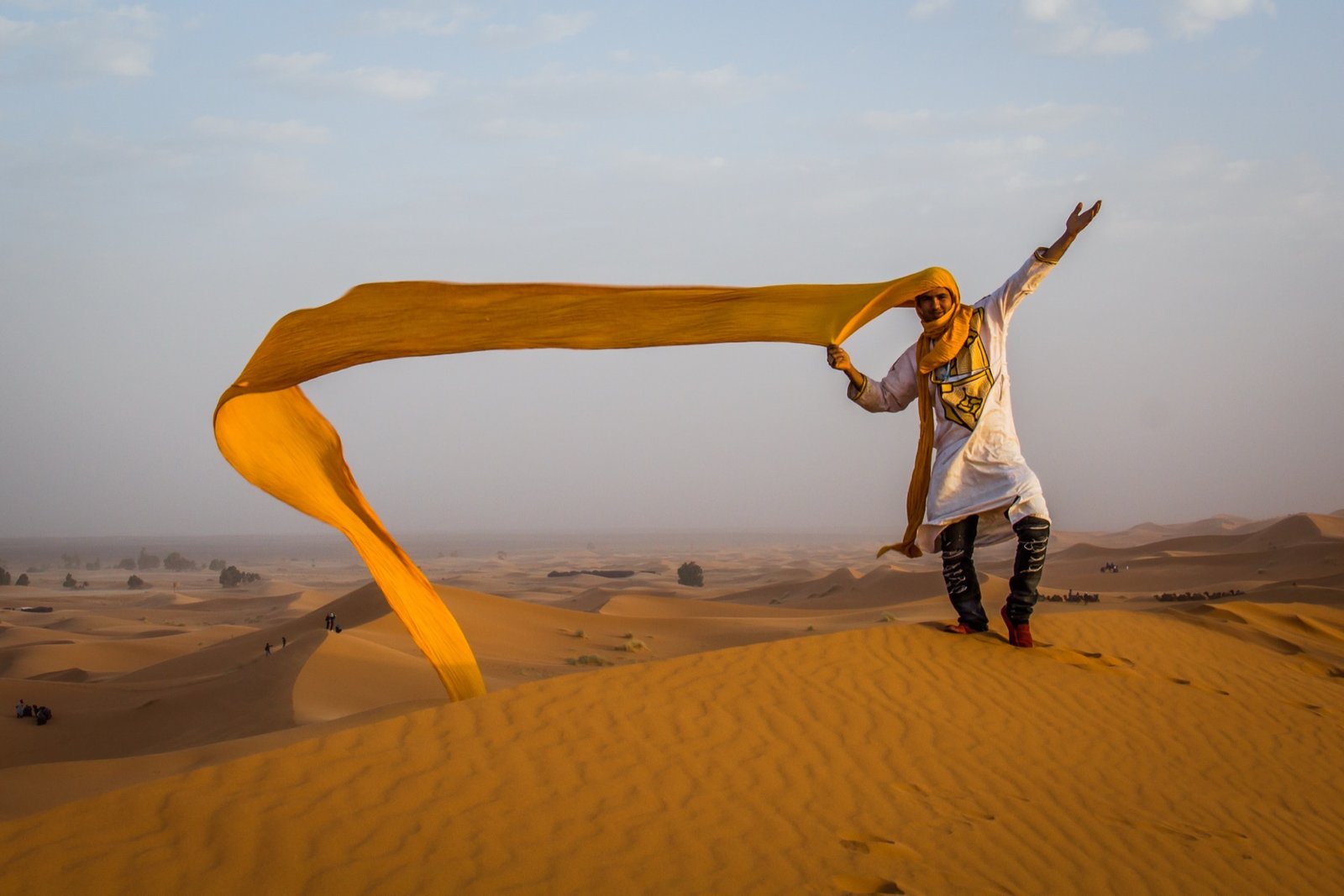
If a desert leg is part of your route, our Morocco road trip itinerary covers the practical side of getting to Merzouga, and our Morocco travel tips guide covers the wider packing and planning picture beyond clothing.
Should You Wear Traditional Moroccan Clothing?
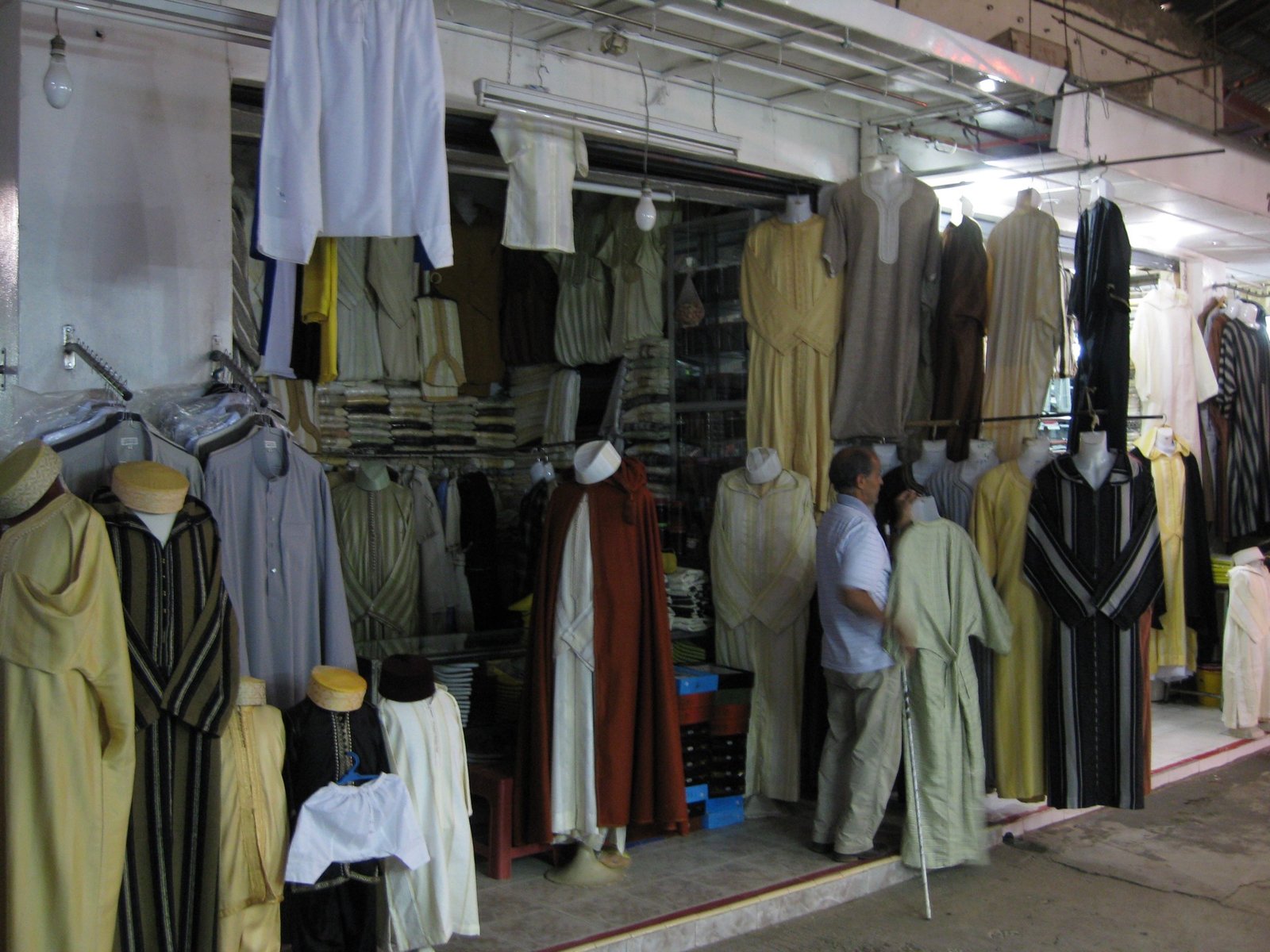
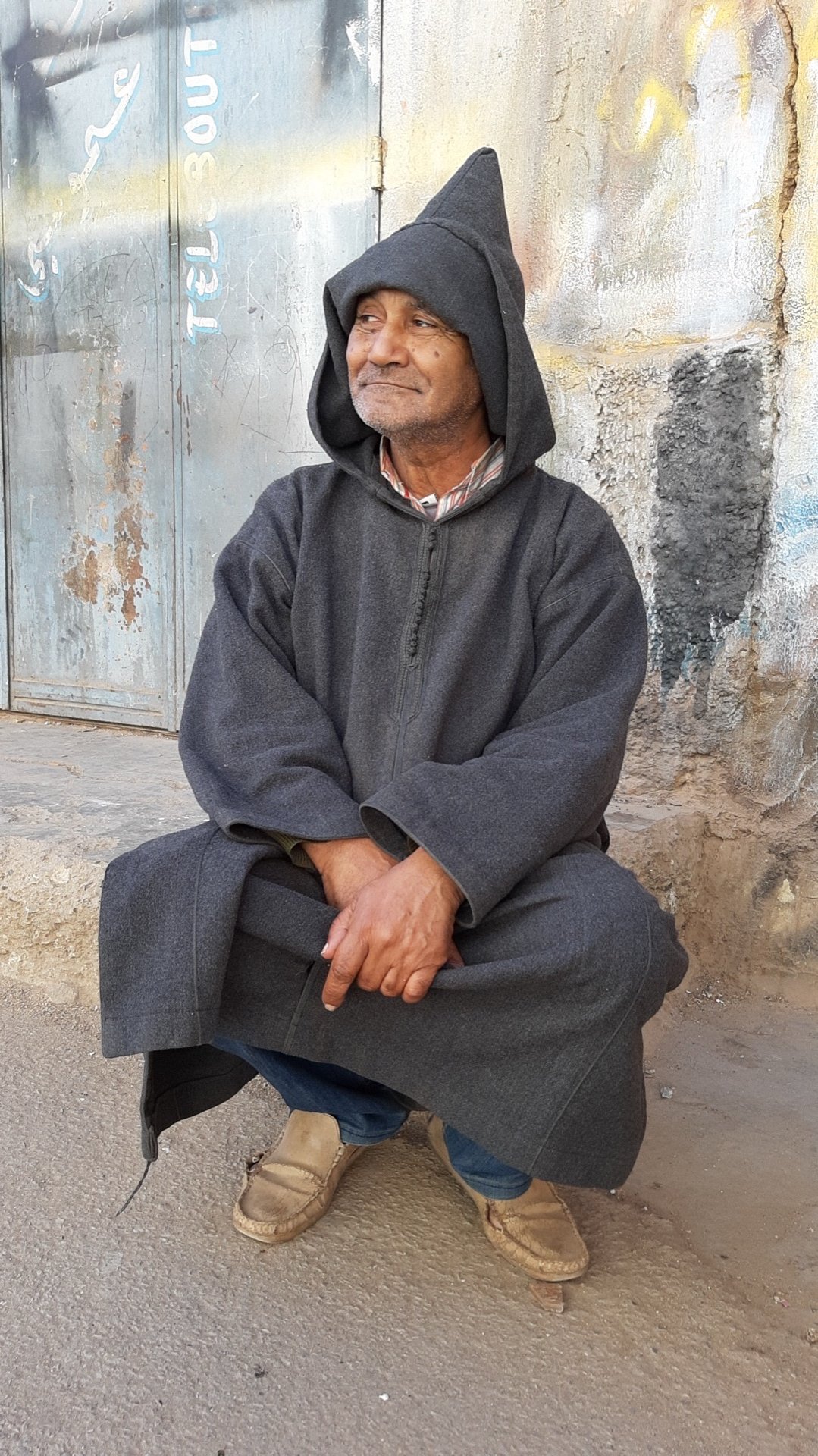
You’ll see djellabas (a long hooded robe) and caftans (a more formal, often richly decorated tunic) throughout Morocco’s souks, and both are genuinely striking souvenirs — in December 2025, UNESCO inscribed the Moroccan caftan specifically for its art, traditions, and craftsmanship on the Representative List of the Intangible Cultural Heritage of Humanity, recognition of just how significant the garment is to Moroccan identity. That said, tourists are not expected to wear either one; loose modern clothing that follows the same modest, breathable logic is entirely acceptable day to day. If you do buy one, wearing it is a matter of personal taste, not obligation or costume — treat it the way you would any culturally significant souvenir bought with genuine appreciation, not as a photo-op outfit.
Packing Checklist: Men and Women
Women
- 2–3 loose midi/maxi dresses or skirts
- Loose trousers or leggings with longer tunics
- Light long-sleeve tops for sun and modesty
- A scarf or light wrap (sun protection, occasional coverage, desert wind)
- Swimwear plus a cover-up or sarong
- Comfortable, closed walking shoes for medina cobblestones
Men
- Lightweight trousers or chinos, plus shorts for beach towns
- T-shirts, polos, and at least one button-down shirt
- A light long-sleeve shirt for sun and cooler evenings
- Swim trunks
- Comfortable, closed walking shoes
Both
- A warm layer for desert nights and Atlas Mountain evenings, even outside winter
- Sunglasses and a wide-brim hat or cap
- High-SPF sunscreen
Common Mistakes
- Packing only summer clothes for a route that includes the Sahara or the Atlas Mountains. Desert nights and mountain evenings get genuinely cold regardless of daytime heat.
- Overpacking modesty for the entire trip. Tourist zones and beach towns are noticeably more relaxed than rural areas — you don’t need to dress for the most conservative setting everywhere you go.
- Wearing expensive swimwear to a hammam. The scrubbing process is rough on delicate fabric.
- Walking through town straight from the beach or pool in just a swimsuit. A quick cover-up avoids the one thing that draws consistent unwanted attention regardless of city.
- Assuming men’s dress doesn’t matter. Sleeveless shirts specifically stand out more than most men expect outside resort areas.
If you’re planning a route that moves between very different settings — a beach stop in Essaouira, the medinas of Marrakech and Fes, and a night in the Sahara — packing right for each leg matters more than packing for the whole trip at once. Contact our travel team if you’d like help planning a route where we can flag exactly what each stop calls for.
Frequently Asked Questions
Do women have to cover their hair in Morocco?
No. Covering your hair is not required or expected of visitors anywhere in Morocco, including at mosques open to non-Muslims. It’s a personal choice, not an obligation.
Can I wear shorts in Morocco as a man?
Yes, especially in tourist areas and beach towns. In medinas and more traditional or rural areas, long trousers are more common among local men and will help you draw less attention, though shorts aren’t prohibited.
Can I wear a bikini in Morocco?
Yes, at riad and hotel pools and on tourist beaches like Agadir, Essaouira, and Taghazout. On more local beaches, a one-piece or a bikini with a cover-up nearby is more comfortable and respectful. Always cover up before walking through town.
What do you wear inside a Moroccan hammam?
Women typically wear underwear or bikini bottoms; going topless is normal in a traditional public hammam. Men wear swim trunks, shorts, or underwear. Choose something simple and dark, since the exfoliation process is hard on delicate fabric.
Is it disrespectful for tourists to wear a djellaba or caftan?
No, but it’s not expected either. Both are genuinely significant garments — the Moroccan caftan was inscribed on UNESCO’s Intangible Cultural Heritage list in December 2025 — and buying one as a souvenir is fine; wearing it is a matter of personal taste, not a requirement.
What should I pack for a Sahara desert trip specifically?
Loose, long, breathable clothing for sun protection, a warm layer for cold desert nights, closed shoes for camel treks, and a scarf or shesh turban for wind and blowing sand.
Sources & References
- UNESCO Intangible Cultural Heritage — “Moroccan Caftan: Art, Traditions and Skills” (inscribed December 2025)
- Visit Morocco — Moroccan National Tourist Office
Last updated: September 2026. Dress norms vary by setting and can shift with the seasons and local context — use this guide as a practical baseline and adjust to what you observe once you arrive.