Driving in Morocco is genuinely manageable for most visitors, but it runs on a different set of practical rules than driving at home — from how right-of-way actually works at unmarked junctions to how a toll autoroute charges you, what a rental company’s “full insurance” really covers, and what to do if you’re stopped at a police checkpoint.
This guide covers everything involved in renting a car and driving in Morocco: what rental companies actually require, how insurance and excess work, the rules of the road, tolls, parking (including the informal but very real “guardian” system), and exactly what to do if you’re in an accident or breakdown. If you’re looking for a specific route itinerary rather than the mechanics of driving itself, see our Morocco road trip itinerary, which covers the classic Marrakech–Sahara–Fes loop in detail.
Renting a Car in Morocco: What You Need
- Age: Most agencies require drivers to be at least 21 with a license held for a year; some set the minimum at 23–25, and drivers under 25 often pay a young-driver surcharge.
- License: If your driving license isn’t in English or French, or doesn’t carry a photo, bring an International Driving Permit (IDP) as well. Without one, agencies can refuse to hand over the car, and traffic police may not accept an unfamiliar license format at face value.
- Documents: Passport, driving license (plus IDP if applicable), and a credit card for the security deposit — debit cards are frequently not accepted for the hold.
- Deposit: Rental companies place a hold on your credit card, typically equal to the insurance excess, released after the car is returned undamaged.
Before you drive off: walk around the car with the rental agent and photograph or video every panel, the tires, and the windscreen, with timestamps. Moroccan rental cars accumulate cosmetic wear, and a documented starting condition is your main protection against being charged for damage you didn’t cause.
Understanding Rental Insurance and Excess
Basic Collision Damage Waiver (CDW) is usually included in the rental price, but it comes with an excess — the amount you’re financially responsible for before the waiver kicks in, often several hundred to over a thousand dollars’ equivalent. Standard CDW also frequently excludes windscreens, tires, headlights, and the underbody of the car, which matter more in Morocco than in most destinations given gravel tracks and unpaved stretches on some routes.
Super CDW (SCDW), offered as an add-on by most agencies, reduces that excess close to zero. It costs more per day but removes the single biggest financial risk of a rental car trip. Independent excess insurance, bought separately before your trip, is often cheaper than an agency’s own SCDW for the same coverage — worth comparing before you arrive rather than deciding at the rental counter.
Rules of the Road
| Road type | Speed limit |
|---|---|
| Urban / town areas | 60 km/h |
| Secondary roads | 80–100 km/h |
| Toll autoroutes | 120 km/h |
Police enforce speed limits strictly, and even a small margin over the limit — as little as 5 km/h — can result in an on-the-spot fine of around 400 MAD. Radar checks are common on both secondary roads and autoroutes.
Priority to the Right: The Rule That Catches Visitors Out
Morocco technically follows a “priority to the right” rule at unmarked junctions, but in practice it’s less absolute than the name suggests. A vehicle already on a main road or roundabout generally has priority over one entering from a smaller side street, even if that smaller street is on the right. The safest approach as a visiting driver is to never assume priority at an unmarked junction — slow down, make eye contact with other drivers where possible, and yield if there’s any ambiguity. This single rule, more than road surface or mountain driving, is what catches out visiting drivers used to clearer right-of-way systems.
Seatbelts, Phones, and Alcohol
Seatbelts are mandatory for driver and front passenger, and increasingly enforced for rear passengers too. Using a handheld phone while driving is illegal. Morocco’s drink-driving limit is very strict — sources vary on the exact legal threshold, but the practical, unambiguous approach is simple: don’t drink at all if you’re driving. Penalties for driving over the limit include significant fines, license confiscation, and potentially imprisonment.
Police Checkpoints: What to Expect
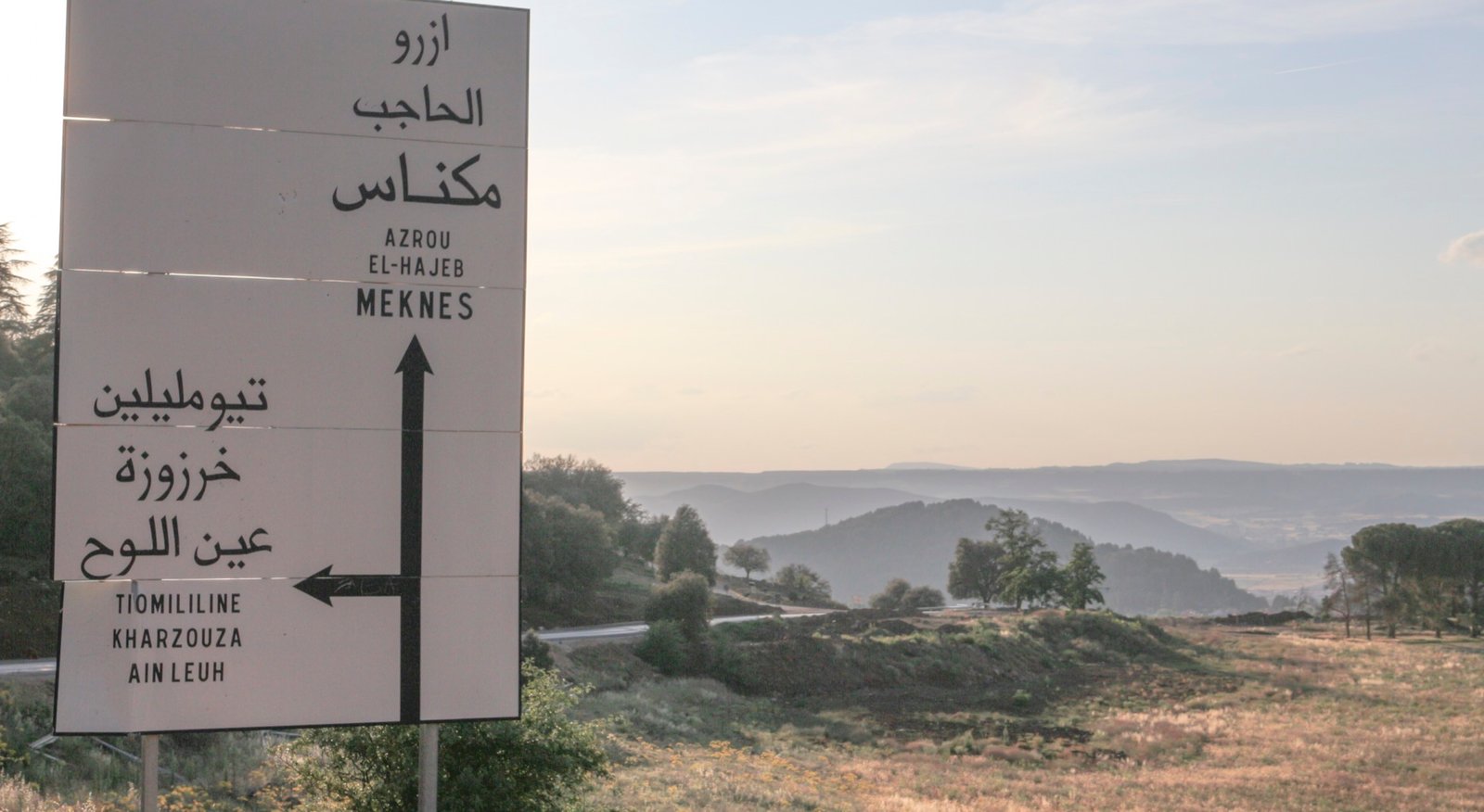
Police checkpoints are a normal, frequent part of driving in Morocco, especially entering and leaving towns and more commonly in the south. They aren’t a sign that something is wrong. Watch for a “Stop/Halt” sign (in Arabic, French, and sometimes Spanish) on the right side of the road, slow down, and come to a full, visible stop. Have your license, passport, and rental documents easily accessible. Officers are generally professional and quick with tourists; a calm, cooperative attitude is all that’s needed in the large majority of stops.
Tolls and Autoroutes
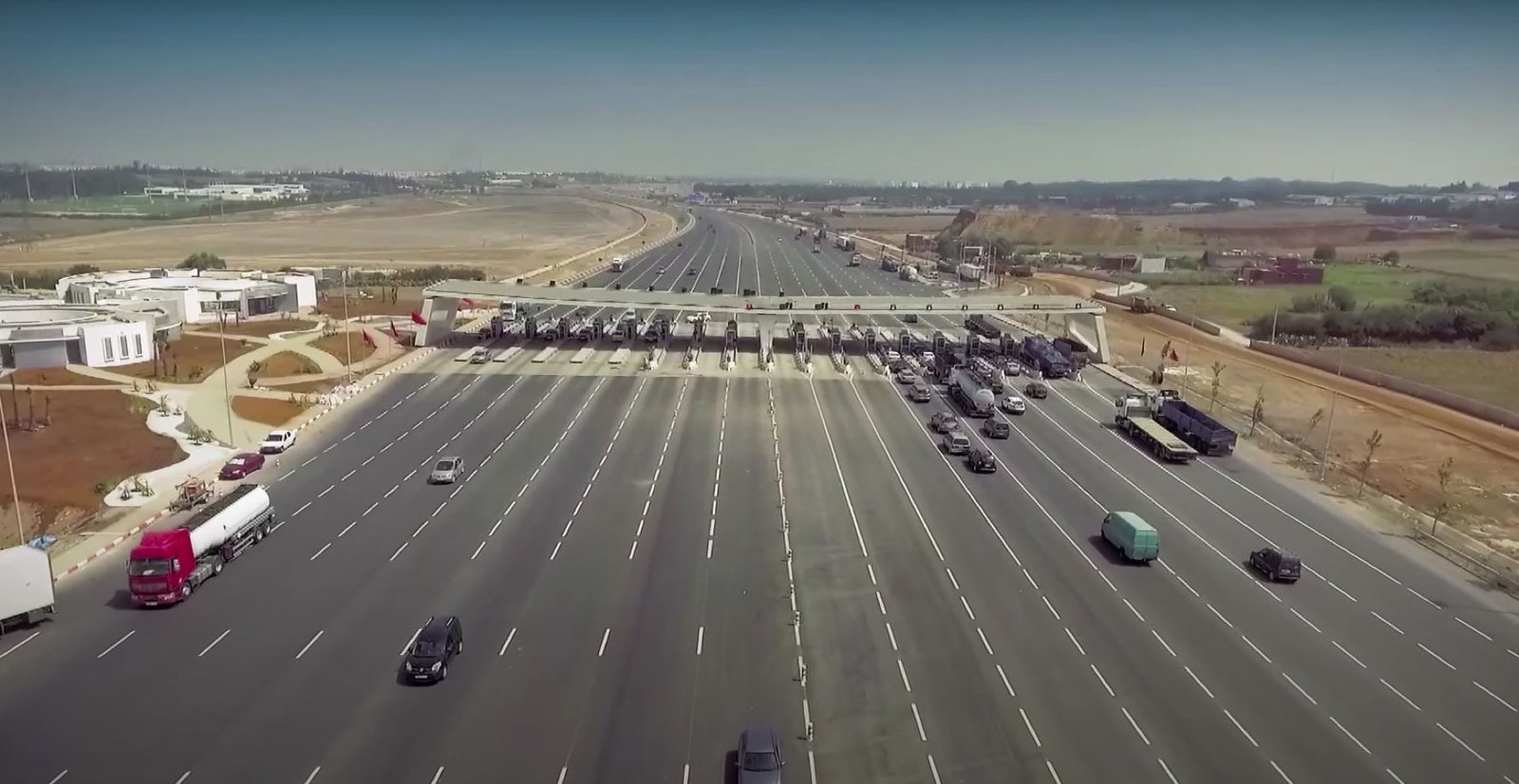
Morocco’s toll motorway network is run by the state company Autoroutes du Maroc (ADM) on a pay-per-use basis. You take a ticket entering the autoroute and pay when you exit, with the fee calculated by distance and vehicle class — roughly 0.25–0.35 MAD per kilometer. Cash is accepted at every booth; the electronic Jawaz tag lets frequent drivers skip the queue but isn’t necessary for a single trip.
| Route | Approximate toll (standard car) |
|---|---|
| Casablanca → Rabat | ~25 MAD |
| Casablanca → Marrakech | ~83–89 MAD |
| Kenitra → Tangier | from ~78 MAD |
ADM rest stops along the autoroutes have fuel, toilets, and often a cafe — a reasonable, safe place to break up a long drive. Note that the autoroute network mainly connects the northern and coastal cities; routes south toward Ouarzazate, Merzouga, or through the Atlas run on non-toll national roads instead.
Parking in Cities and Medinas
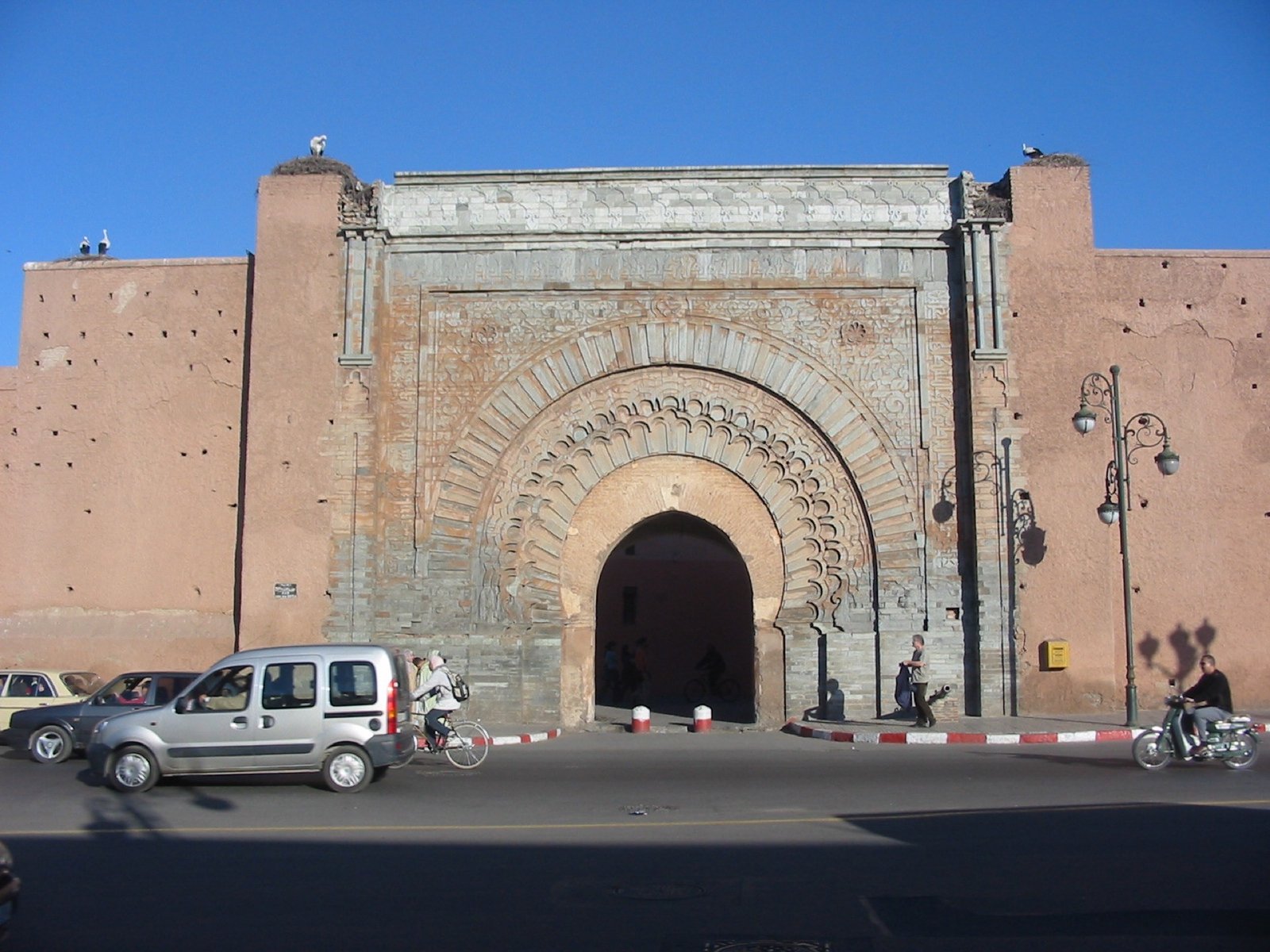
Most historic medinas — including Marrakech, Fes, and Chefchaouen — are largely or entirely car-free. You’ll park outside the walls, often near one of the old city gates, and walk or take a short taxi in with your luggage.
Street parking across Morocco commonly involves an informal but genuinely useful institution: a “gardien,” usually in a fluorescent vest, who waves you into a space and keeps an eye on the car while you’re away. This isn’t a scam — it’s a real, widely accepted local job, and the small payment is expected rather than optional.
| Situation | Typical tip |
|---|---|
| Daytime street parking | 2–5 MAD, paid when you return |
| Overnight parking | 10–20 MAD, sometimes up to 30 MAD in busy medina-adjacent areas |
Pay when you collect the car, not upfront — that’s how the system is meant to work, and it keeps the guardian’s incentive aligned with actually watching your vehicle.
What to Do in an Accident or Breakdown
- Don’t move the vehicles, even for a minor bump, unless staying in place is genuinely dangerous. Position matters for the official report.
- Call the police (gendarmerie on rural roads, police in cities) and wait for them to arrive and prepare an official report, called a constat.
- Get a copy of the report — it’s required within 48 hours for any insurance claim to proceed.
- Contact your rental company as soon as possible; most have an emergency number provided in the rental contract.
- If the report finds you not at fault, you owe nothing under standard CDW terms; if you’re found responsible, your liability is capped at your excess — another reason SCDW or independent excess insurance is worth having before you need it.
For a mechanical breakdown rather than an accident, call the rental company’s assistance line first — most include 24-hour roadside assistance, though response times in remote areas (the desert approach to Merzouga, for instance) can be several hours. This is one of several reasons to avoid driving remote stretches after dark, covered in more detail in our road trip itinerary guide.
Self-Drive or Private Driver?
Self-driving gives you full flexibility and is often the cheaper option for a solo traveler or couple; a private driver costs more per booking but removes the mountain-pass stress, unfamiliar road rules, and checkpoint logistics entirely, and often works out close in price once split across a small group. We cover this decision in full, with real cost comparisons, in our Morocco road trip itinerary guide.
Common Mistakes to Avoid
- Skipping the pre-rental photo walkaround. Without timestamped photos, disputing a damage charge at drop-off is your word against theirs.
- Assuming right-of-way at unmarked junctions. Slow down and yield when in doubt — see the priority-to-the-right section above.
- Not budgeting for tolls on a Casablanca–Rabat–Tangier route. They’re modest individually but add up on a longer northern loop.
- Paying a parking guardian upfront. Pay when you return to the car, as is standard practice.
- Declining all rental insurance to save money. The base CDW excess is high enough that a single at-fault incident can be genuinely expensive without SCDW or independent excess cover.
If working out the logistics of a self-drive route sounds like more than you want to manage, that’s exactly where a private driver or a planned itinerary helps most. Contact our travel team to talk through your route, or see our full Morocco travel cost breakdown to compare self-drive against a private-driver budget.
Frequently Asked Questions
Do I need an International Driving Permit to drive in Morocco?
Not always, but if your license isn’t in English or French or lacks a photo, you’ll need one. Bringing an IDP regardless avoids any ambiguity with rental agencies or police.
What is the speed limit in Morocco?
60 km/h in towns, 80–100 km/h on secondary roads, and 120 km/h on toll autoroutes. Enforcement is strict, with fines starting around 400 MAD even for small violations.
Are there tolls on Moroccan highways?
Yes, on the main autoroute network connecting cities like Casablanca, Rabat, Tangier, and Marrakech, run by Autoroutes du Maroc (ADM). Routes into the Atlas Mountains or south toward the Sahara use non-toll national roads instead.
What should I do if I’m stopped at a police checkpoint?
Slow down, stop fully, and have your license, passport, and rental documents ready. Checkpoints are routine, not a sign of trouble, and a calm, cooperative approach is all that’s typically needed.
Is basic rental insurance enough in Morocco?
Basic CDW is included but carries a high excess, often excluding tires, windscreens, and the underbody of the car. Adding Super CDW or independent excess insurance significantly reduces your financial exposure if something goes wrong.
Who has right of way in Morocco?
Technically priority to the right at unmarked junctions, but in practice vehicles already on a main road or roundabout generally have priority. As a visitor, the safest approach is to yield whenever right-of-way is unclear.
Do I have to pay parking guardians in Morocco?
It’s expected, not legally required, but it’s a real, widely accepted system that genuinely helps keep your car safe. A few dirhams for daytime parking and 10–20 MAD overnight is standard, paid when you return to the vehicle.
Sources & References
- Autoroutes du Maroc (ADM) — official toll rate schedule for Morocco’s motorway network
- Ministry of Equipment and Water (Morocco) — road and transport infrastructure authority
Last updated: September 2026. Speed limits, toll prices, and insurance terms change and vary by rental company — confirm current rates and policy details directly with your chosen agency before you book.