




Todra Gorge is the stop most Marrakech-to-Sahara itineraries treat as a photo break and a stretch of the legs — a mistake, since it’s one of the most dramatic single stretches of road in Morocco and, separately, a genuinely world-class rock climbing destination that some travelers plan an entire extra day around.
This guide is for travelers with Todra Gorge somewhere on their route to Merzouga or the Sahara, whether you’re planning a quick 30-minute stop or want to know if it’s worth staying overnight. You’ll get real distances and drive times, what the gorge actually looks like and why, what there is to do beyond the viewpoint everyone photographs, and the one genuine safety consideration — flash floods — worth knowing before you walk in.
What Is Todra Gorge?
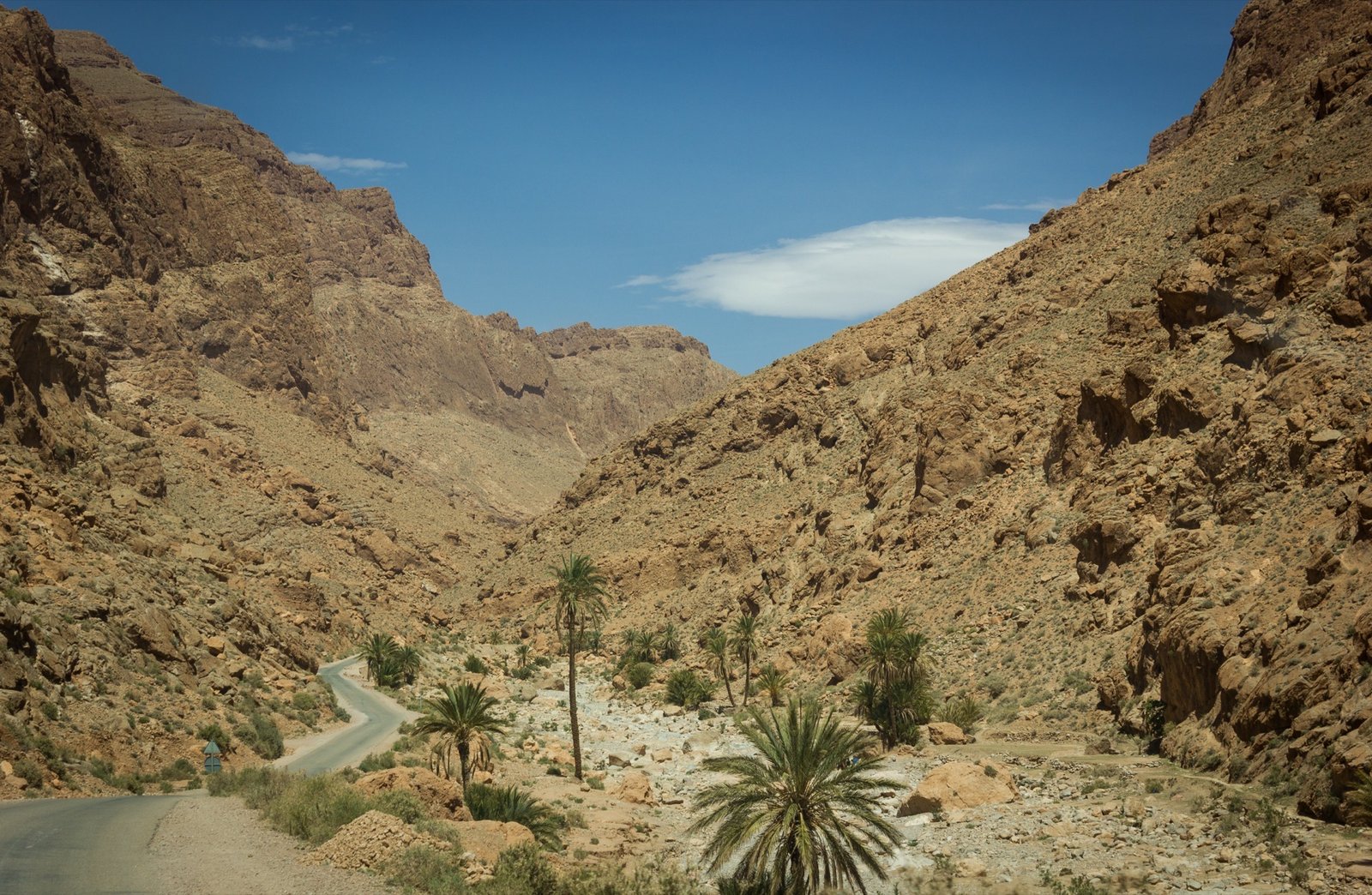
Todra Gorge (also spelled Todgha) is a limestone river canyon in the eastern High Atlas Mountains, carved over millennia by the Todgha River near the town of Tinghir. The gorge runs for miles, but the dramatic stretch every photo shows is a specific 600-meter section about 15 km from Tinghir, where the canyon narrows to as little as 10 meters wide between sheer rock walls rising up to 300–400 meters on either side. A single paved road and the river itself share the narrow floor, which is exactly what makes driving through it feel different from any other stretch on the route south.

Getting to Todra Gorge: Distances and Entry
| From | Distance / drive time |
|---|---|
| Ouarzazate | ~150 km / about 3 hours |
| Tinghir (the nearest town) | ~15 km / about 20 minutes |
| Merzouga (Sahara) | ~250 km / 4–5 hours |
| Marrakech | ~360 km / around 6–7 hours direct, longer with stops |
There’s no entry fee to drive or walk through Todra Gorge — it’s a public road and riverbed, not a ticketed site. The only cost most visitors encounter is parking near the narrow section, sometimes informally managed by a local for a small tip, and any guide fee if you’ve arranged one for climbing or hiking.
Arrive earlier in the day if you can. The gorge is at its best before tour buses and midday traffic build up in the narrow section, and the light on the canyon walls is better in the morning than under the flat midday sun.
What to See and Do
Walk the Gorge Floor
Most visitors do this without realizing it’s an option beyond the car park: park near the narrowest point and walk along the riverbed road on foot for as long as you like, looking straight up at the rock walls rather than through a windshield. The path is rocky and uneven in places, so wear real shoes, not sandals, and carry water — even a 30-minute walk in direct sun adds up. Look for Barbary sheep and, if you’re lucky, griffon vultures nesting on the higher ledges.
Rock Climbing
This is the part most road-trip itineraries skip entirely, and it’s a genuine gap: Todra Gorge is one of Morocco’s premier climbing destinations, with more than 450 bolted routes on solid limestone.
| Level | What’s available |
|---|---|
| Beginner | Single-pitch sport routes from French grade 4a, low-commitment cragging near the road |
| Intermediate | The bulk of the 450+ routes, well-bolted on featured limestone |
| Advanced | Multi-pitch routes up to 9 pitches, grades up to 8a+ |
If you’re not an experienced climber but want to try it, local guides in Tinghir offer half-day introductions on easier routes with gear provided — worth arranging a day or two in advance rather than showing up expecting availability on the spot. If climbing is a real priority rather than a quick add-on, it’s worth building an extra night into your itinerary here rather than treating the gorge as a drive-through stop.
Tinghir and the Palm Oasis
Tinghir itself, at the mouth of the gorge, sits above a long palm oasis fed by the same river system, with traditional Amazigh (Berber) ksour (fortified earthen villages) visible from the roadside. It’s a working town, not a tourist set piece, and a worthwhile few minutes even if your main goal is the gorge itself.
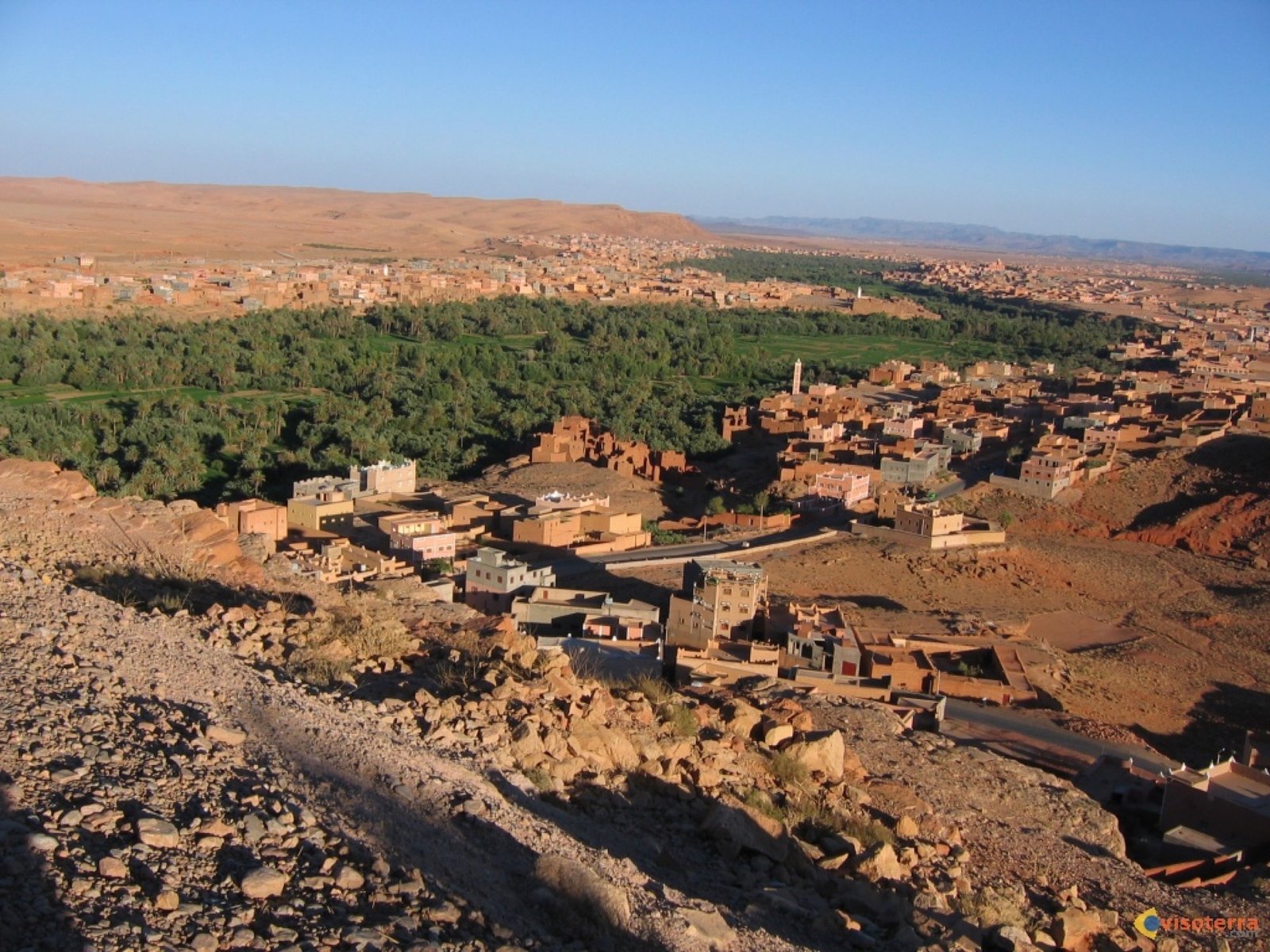
The ksour and farming villages around Tinghir and the gorge are Amazigh communities, part of the same pre-Sahara Amazigh culture covered in more depth in our guide to Berber culture in the Atlas and Sahara, including etiquette for visiting respectfully.
Where to Stay
A handful of small hotels and guesthouses sit directly at the gorge’s narrowest point, letting you walk out your door straight into the canyon before the day-trip crowds arrive — genuinely worth it if you’re staying overnight rather than passing through. Tinghir itself has more options and a wider range of prices if you’d rather stay in town and drive the short distance to the gorge. Either works well as a stop between Ouarzazate/Dades Gorge and Merzouga on the classic southern loop.
Safety: Flash Floods and Practical Tips
Todra Gorge is generally very safe if you stick to the road and marked paths, with one genuine, specific hazard: flash floods after heavy rain. The gorge is a natural drainage channel, and a storm even some distance away in the mountains can send a sudden surge of water through the narrow section with little warning at ground level. Avoid walking or driving into the narrowest stretch during or right after heavy rain, and ask locally if there’s been recent rainfall in the mountains if conditions look unsettled. Outside of rain, the main practical risks are heat and uneven footing — sturdy shoes, water, and sun protection cover the rest.
Best Time to Visit
March–May and September–November are the most comfortable months, with daytime temperatures typically 18–28°C (64–82°F). Summer, particularly July and August, regularly pushes past 35°C (95°F) in the gorge, which is genuinely uncomfortable for walking or climbing in direct sun for more than a few minutes. Since Todra Gorge usually sits mid-route on a Marrakech–Merzouga trip, the best season for the gorge lines up with the best season for the desert leg too — see our Morocco road trip itinerary for how the whole route times out.
How Todra Gorge Fits Into Your Route
On the classic southern loop, Todra Gorge is usually paired with nearby Dades Valley and its gorge, about 90 km away, as a two-gorge day between Ouarzazate and Merzouga. Most travelers see both in one long day, but if you can spare an extra night — especially for climbing, or simply to walk the gorge floor without a schedule — splitting them across two days makes for a noticeably less rushed middle stretch of the trip.
If you’d rather not plan the logistics yourself, contact our travel team to build Todra Gorge — with or without a climbing day — into a custom Marrakech-to-Sahara itinerary.
Common Mistakes
- Treating it as a 10-minute photo stop. The narrow section is impressive from a car, but walking even part of the gorge floor on foot is a genuinely different experience.
- Not knowing climbing is an option. Most road-trip travelers never realize Todra is a world-class climbing destination, not just a scenic drive-through.
- Wearing sandals for the walk. The gorge floor is rocky and uneven; proper shoes make a real difference.
- Ignoring rain in the forecast. Flash flood risk is real, specific, and easy to avoid simply by checking conditions and asking locally.
- Arriving at midday. Harsh overhead light and tour-bus traffic both peak around midday — earlier or later is better for photos and for the walk itself.
Frequently Asked Questions
Is there an entry fee for Todra Gorge?
No. Todra Gorge is a public road and riverbed with no official entry fee. You may encounter informal parking fees near the narrow section.
How far is Todra Gorge from Merzouga?
About 250 km, roughly 4–5 hours by car, making it a natural stop on the way to the Sahara rather than a separate detour.
Can beginners go rock climbing in Todra Gorge?
Yes. Alongside advanced multi-pitch routes, there are single-pitch beginner routes from French grade 4a, and local guides in Tinghir offer half-day introductions with gear provided.
Is Todra Gorge safe to visit?
Generally yes, with one specific hazard: flash floods after heavy rain in the surrounding mountains. Avoid the narrowest section during or right after rain, and check conditions locally if weather looks unsettled.
Should I visit Todra Gorge or Dades Gorge?
Most travelers on the southern loop visit both, since they’re only about 90 km apart and commonly paired in one day between Ouarzazate and Merzouga. Todra is narrower and more dramatic at its peak section; Dades has a broader, winding valley with different scenery.
Can you swim in Todra Gorge?
The river is generally shallow and more of a stream than a swimming spot, though this varies seasonally. It’s better thought of as a scenic and climbing destination than a swimming one.
Sources & References
- Visit Morocco — Moroccan National Tourist Office
Last updated: September 2026. Road conditions and weather-related risks like flash floods change — check current conditions locally before you go, especially outside the dry season.

