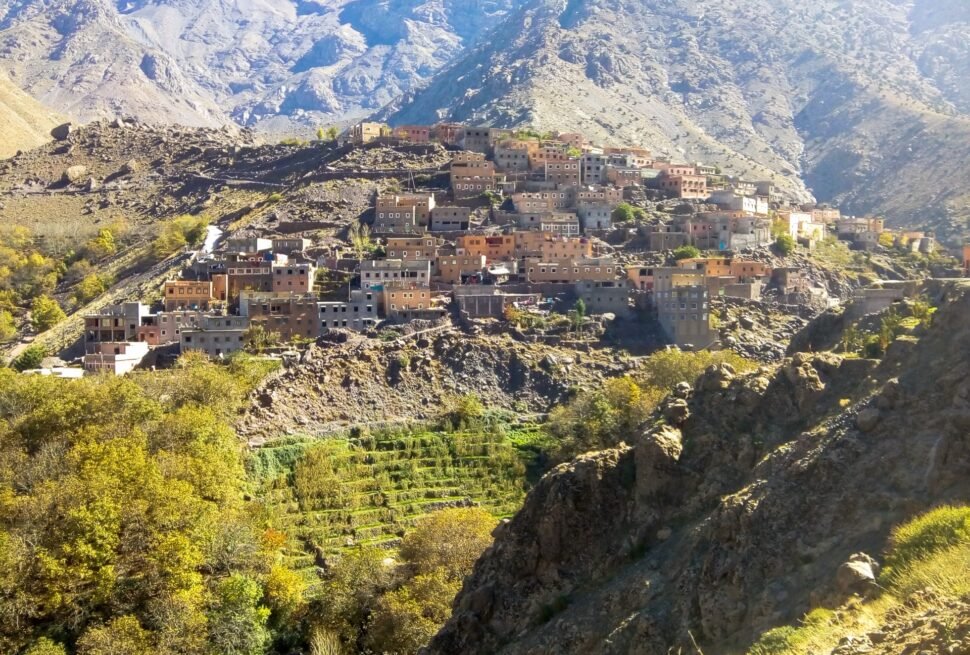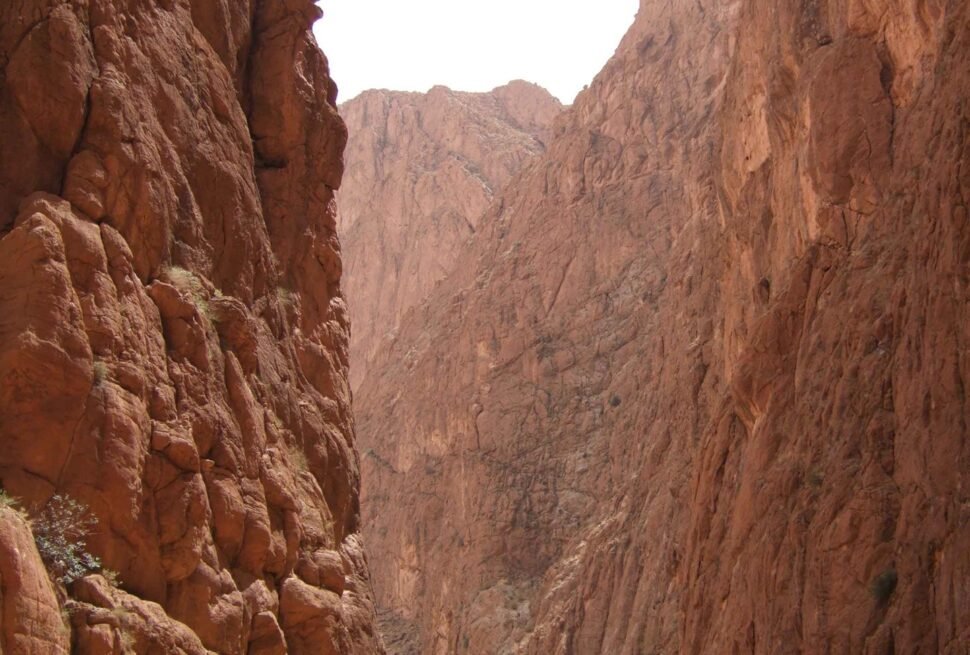

The Dades Valley is the stretch of southern Morocco most road-trip itineraries drive through without really stopping in — which is a shame, since it’s the single richest section of the classic Marrakech-to-Sahara route: fortified kasbahs, a valley that smells like roses in spring, and one of the most photographed switchback roads in the country, all before you even reach the desert.
This guide is for travelers with the Dades Valley somewhere on their route south, whether that’s a quick pass-through or a deliberate overnight stop. You’ll get what’s actually worth stopping for between Skoura and Boumalne Dades, real distances, where to stay, and exactly how the Dades Valley pairs with Todra Gorge and the rest of your route to Merzouga.
The Road of a Thousand Kasbahs
The N10 route east from Ouarzazate through Skoura, Kelaat M’Gouna, and Boumalne Dades is known locally as the Road of a Thousand Kasbahs — an old caravan trade route dotted with fortified earthen kasbahs and ksour built by Amazigh communities over centuries, many still inhabited or farmed around today rather than preserved as museum pieces. It’s the same route most Marrakech–Merzouga itineraries already follow; the difference is whether you drive past the kasbahs or actually stop.
| Stop | Distance from Ouarzazate | Highlight |
|---|---|---|
| Skoura | ~40 km / 45 min | Palm oasis, Kasbah Amridil |
| Kelaat M’Gouna | ~95 km / 1.5 hrs | Valley of Roses |
| Boumalne Dades (gateway to the gorge) | ~120 km / 2 hrs | Start of the Dades Gorge road |
| Dades Gorge switchbacks | ~140–150 km / ~3 hrs | The famous zigzag road and canyon |
Skoura Oasis and Kasbah Amridil
Skoura is a sprawling palm oasis studded with earthen kasbahs, many still standing after generations of use. Kasbah Amridil is the one worth actually stopping for: a well-preserved fortified residence, now a small museum showing traditional kitchen and agricultural equipment, and once famous enough to appear on Morocco’s old 50-dirham banknote. It’s a genuinely useful stop for understanding what a working kasbah looked like day to day, as distinct from the more theatrical scale of Ait Ben Haddou further west.
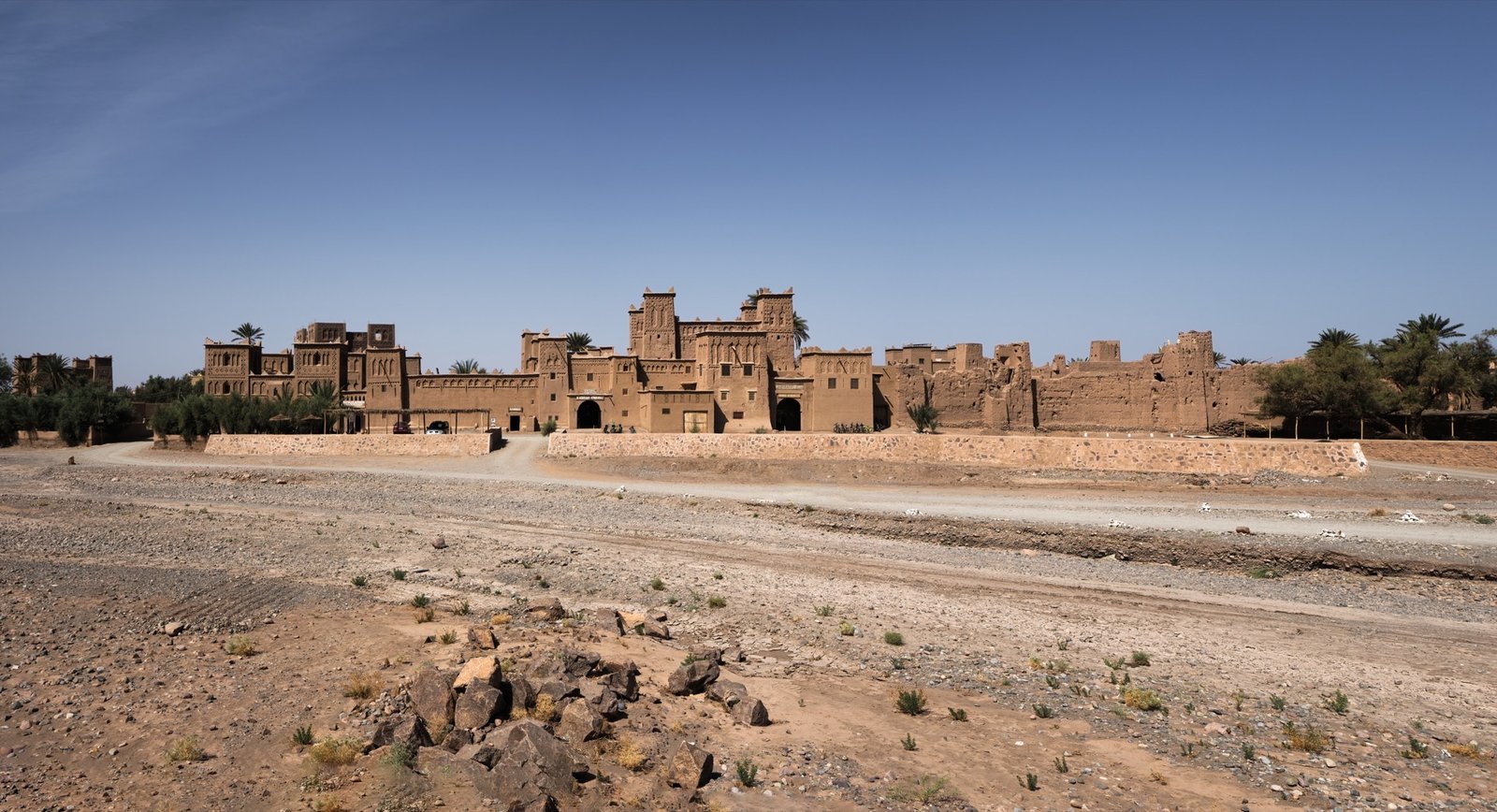
Thirty to 45 minutes is enough for a proper visit, including a walk through part of the oasis itself. If you’re deciding whether Skoura is worth a stop on an already-long driving day, it is — especially compared with rushing straight past on the way to Kelaat M’Gouna.
Kelaat M’Gouna and the Valley of Roses
Kelaat M’Gouna sits at the heart of what’s known as the Valley of Roses, a roughly 30 km stretch between the town and Boumalne Dades where the Damask rose (Rosa damascena) has been cultivated for centuries — not in dedicated fields, but grown as flowering hedges around oasis gardens of barley, almonds, and vegetables, which is part of what makes the valley look and smell the way it does in spring.
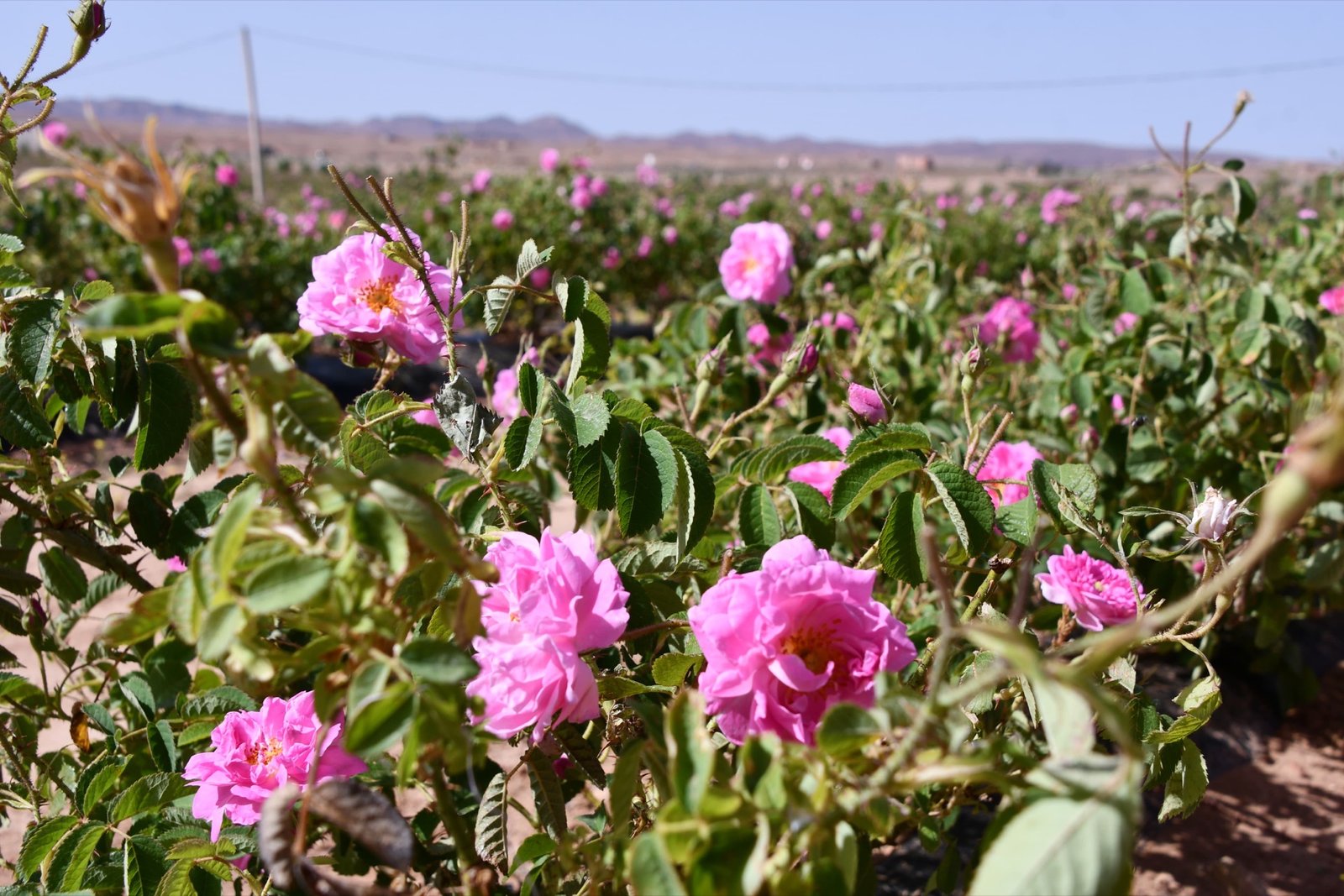
The rose harvest, typically in late April to May, feeds local cooperatives that distill rose water and rose oil — some open their process to visitors, and buying directly supports the same kind of women’s cooperative model common across southern Morocco. The town also hosts an annual Rose Festival (Moussem des Roses), usually held in May with music, parades, and the crowning of a Rose Queen, though exact dates shift each year and are worth confirming closer to your travel dates rather than assuming a fixed date range.
Outside the harvest window, Kelaat M’Gouna is still a worthwhile brief stop, but the sensory experience that makes it famous is genuinely tied to spring timing — worth factoring in if rose season is a priority for your trip.
Dades Gorge and the Switchback Road
Past Boumalne Dades, the valley narrows into Dades Gorge, a roughly 60 km canyon road running north from the town. The section every traveler photographs is a dramatic set of hairpin switchbacks a short way into the gorge, climbing the canyon wall in tight curves with a red-rock backdrop that looks almost sculpted.
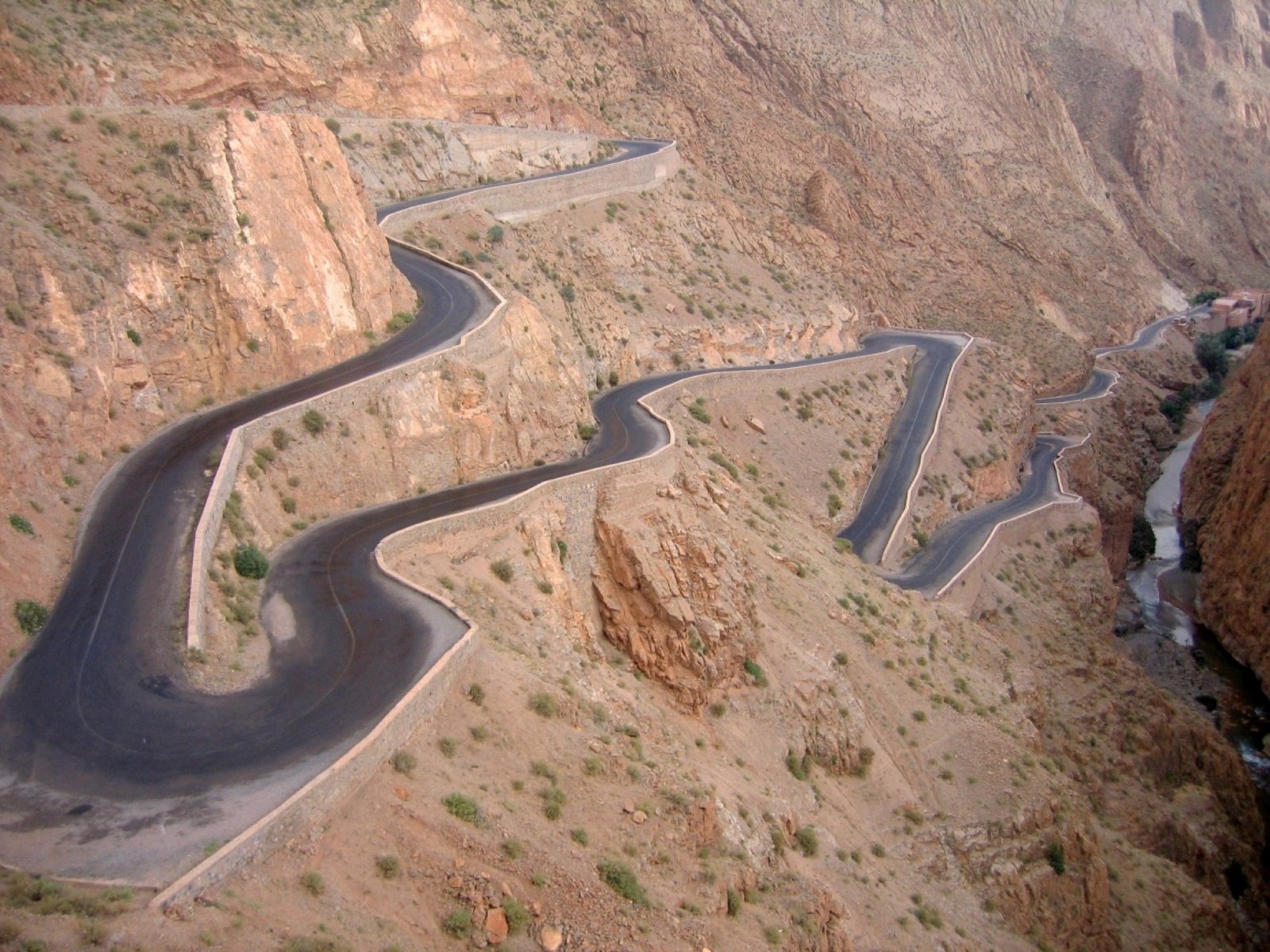
Further into the gorge, near the village of Tamellalt, is the trailhead for the Monkey Fingers hike — a set of bizarre, eroded rock pillars reachable on a half-day walk through a narrower side canyon, popular with hikers who want more than a driving stop. It’s a genuinely different experience from the switchback viewpoint: quieter, slower, and worth the extra time if hiking is part of why you’re in the region.
Where to Stay
Boumalne Dades and the road into the gorge have a range of small hotels and guesthouses, several positioned specifically for switchback views from the terrace or rooftop — worth booking one of these if you’re staying overnight rather than pushing straight through to Todra Gorge or Merzouga the same day. Skoura also has a handful of atmospheric kasbah-converted guesthouses if you’d rather split the drive with an earlier stop.
Best Time to Visit
March–May and September–November give the most comfortable temperatures for driving and walking, with spring carrying the added benefit of the rose harvest. Summer gets genuinely hot in the valley, and while the drive itself is fine in an air-conditioned car, stops like Skoura’s oasis walk or the Monkey Fingers hike are considerably less pleasant at midday in July or August.
How the Dades Valley Fits Your Route
On the classic southern loop, the Dades Valley sits between Ouarzazate/Ait Ben Haddou and Todra Gorge, about 90 km before Todra on the way to Merzouga and the Sahara. Most itineraries cover Skoura, Kelaat M’Gouna, and the Dades switchbacks in one day, continuing on to Todra Gorge and Merzouga the next — a genuinely full but doable day if you keep stops efficient, or a more relaxed two days if you’d rather not rush Skoura and the switchbacks on the same afternoon.
For the full day-by-day route this fits into, see our Morocco road trip itinerary, and for what comes right after, our Todra Gorge guide covers the next stretch toward Merzouga in detail. The kasbahs and villages along this route are Amazigh communities, part of the culture covered in our guide to Berber culture in the Atlas and Sahara.
Common Mistakes
- Driving straight through without stopping at Skoura. It’s an easy, worthwhile 30–45 minute detour that many itineraries skip entirely.
- Expecting the Valley of Roses to look the same year-round. The visual and sensory highlight is genuinely tied to the spring harvest window, not a fixed year-round feature.
- Only photographing the switchbacks from the car. There are proper viewpoints a short walk from the road with a far better vantage than a moving-car photo.
- Not budgeting time for Monkey Fingers. It’s easy to miss entirely if you’re only planning for the drive-through switchback view.
- Trying to do Skoura, Kelaat M’Gouna, the switchbacks, and Todra Gorge all in one day. Technically possible, but rushed enough that most travelers regret not splitting it across two days.
If you’d rather not plan the stops and pacing yourself, contact our travel team to build the Dades Valley properly into a custom Marrakech-to-Sahara route rather than a rushed drive-through.
Frequently Asked Questions
What is the Road of a Thousand Kasbahs?
It’s the local name for the N10 route from Ouarzazate through Skoura, Kelaat M’Gouna, and Boumalne Dades — an old caravan route lined with fortified earthen kasbahs and ksour built by Amazigh communities.
How far is the Dades Valley from Ouarzazate?
Skoura is about 40 km, and the Dades Gorge switchbacks are roughly 140–150 km, about 3 hours’ drive from Ouarzazate.
When is the best time to see the Valley of Roses?
The rose harvest typically runs late April into May, which is also when Kelaat M’Gouna’s Rose Festival takes place. Confirm the current year’s festival dates closer to your trip, since they shift annually.
Is Kasbah Amridil worth visiting?
Yes. It’s one of the best-preserved kasbahs in the region, now a small museum, and a genuinely useful stop for understanding traditional kasbah life beyond the scale of Ait Ben Haddou.
How does the Dades Valley connect to Todra Gorge?
They’re about 90 km apart and commonly paired on the same day or two-day stretch of the Marrakech-to-Merzouga route, with the Dades Valley coming first if you’re heading toward the Sahara.
What is the Monkey Fingers hike?
A half-day walk near the village of Tamellalt, further into Dades Gorge, leading to a set of unusual eroded rock pillars in a narrower side canyon — a good option if you want more than a driving stop in the gorge.
Sources & References
- Visit Morocco — Moroccan National Tourist Office
Last updated: September 2026. Rose Festival dates and seasonal conditions change year to year — confirm current dates before planning a trip specifically around the harvest or festival.